
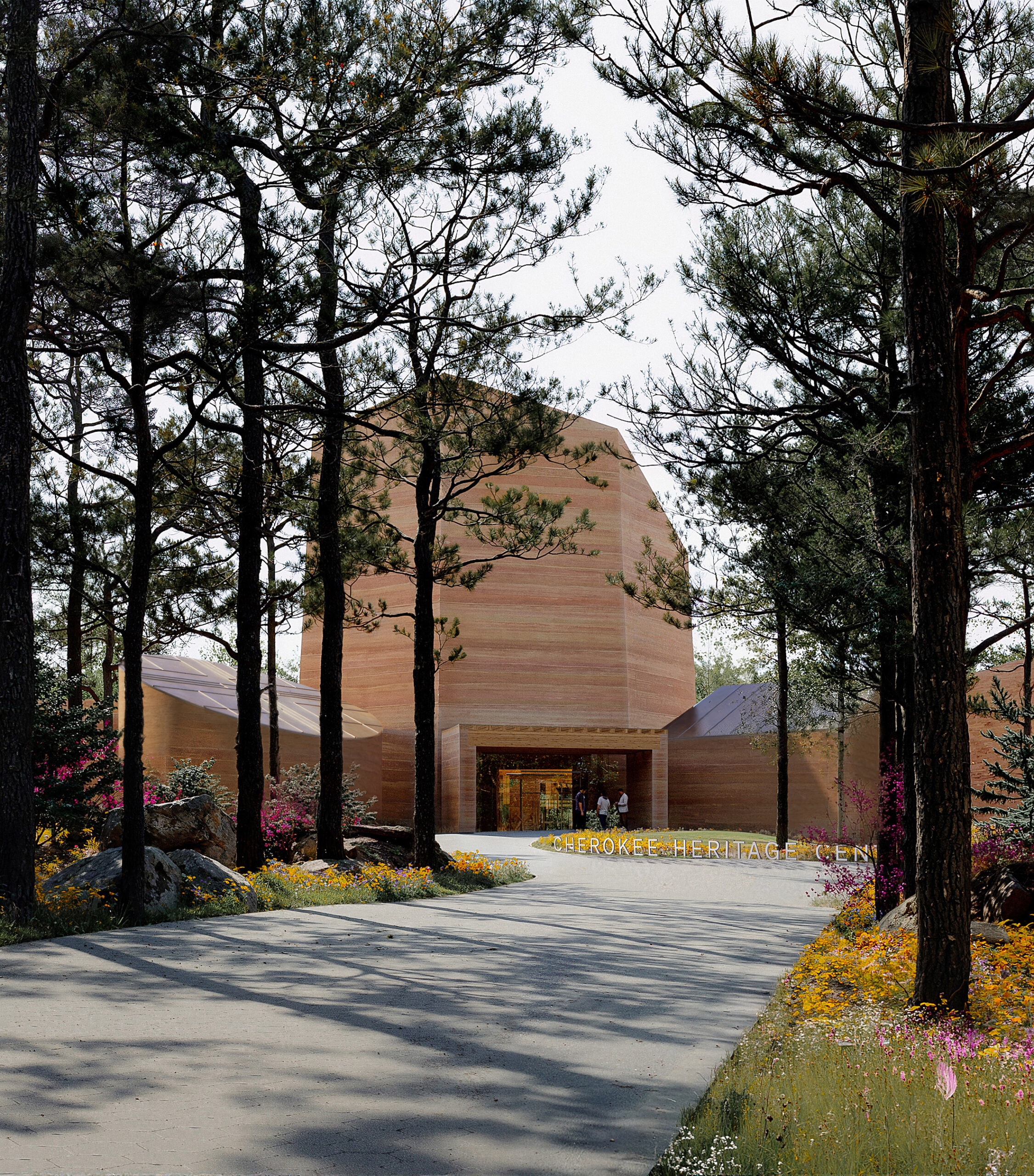
American studio Safdie Architects has unveiled a design for a series of interconnected pavilions in the US state of Oklahoma that will serve as a cultural campus for the Cherokee people.
The Cherokee Heritage Center’s design features a series of pavilions with walls that “recall” the layered earth material that rises between and above the groves of the Cherokee nation’s capital at Tahlequah in eastern Oklahoma.
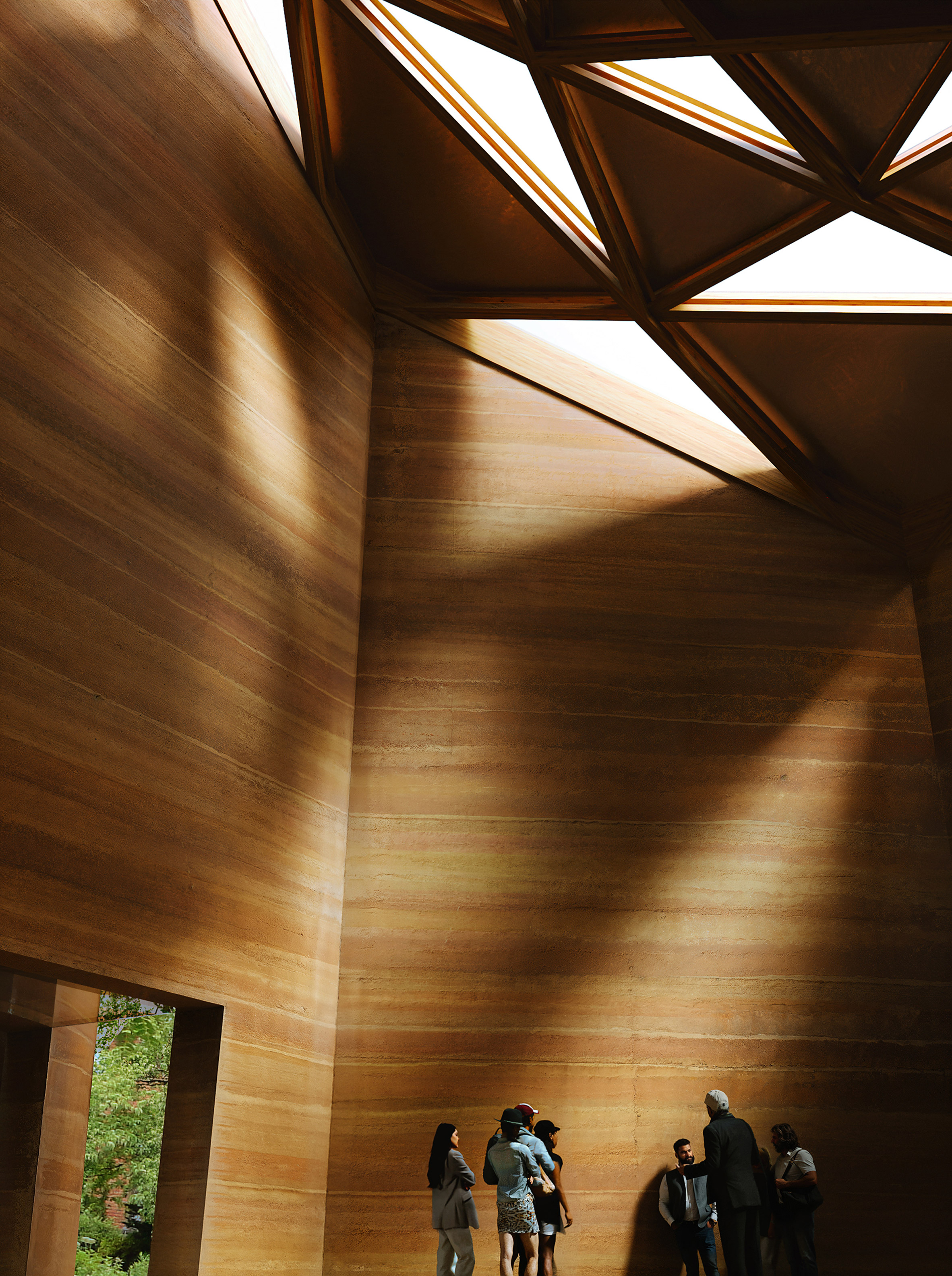
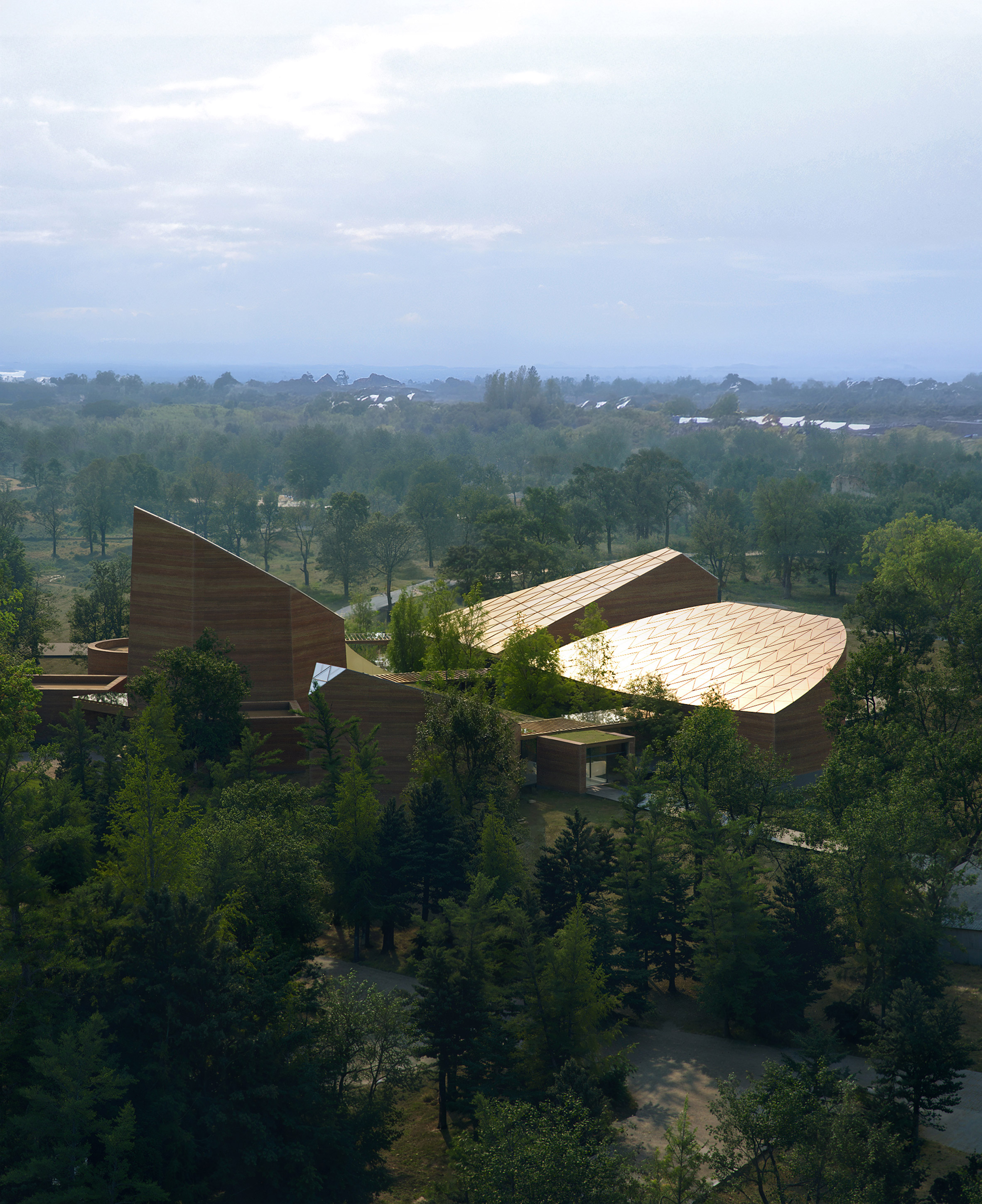
The tallest structures serve as beacons among the trees. The structure, called the Great Hall, will be capped by a geometric metal roof that incorporates the Cherokee seven-pointed star symbol.
Glass panels between metal dots on the flower-like ceiling let light into the cavernous interior.
“With respect and celebration of Cherokee culture, the design is inspired by historic sites,” said Moshe Safdie, founding partner of Safdie Architects.
“The pavilion is sited, the building is embedded in the forest, and Cherokee stories are integrated throughout, creating an environment that promotes a sense of connection, belonging, and continuity between the Cherokee people, their history, and the land.”
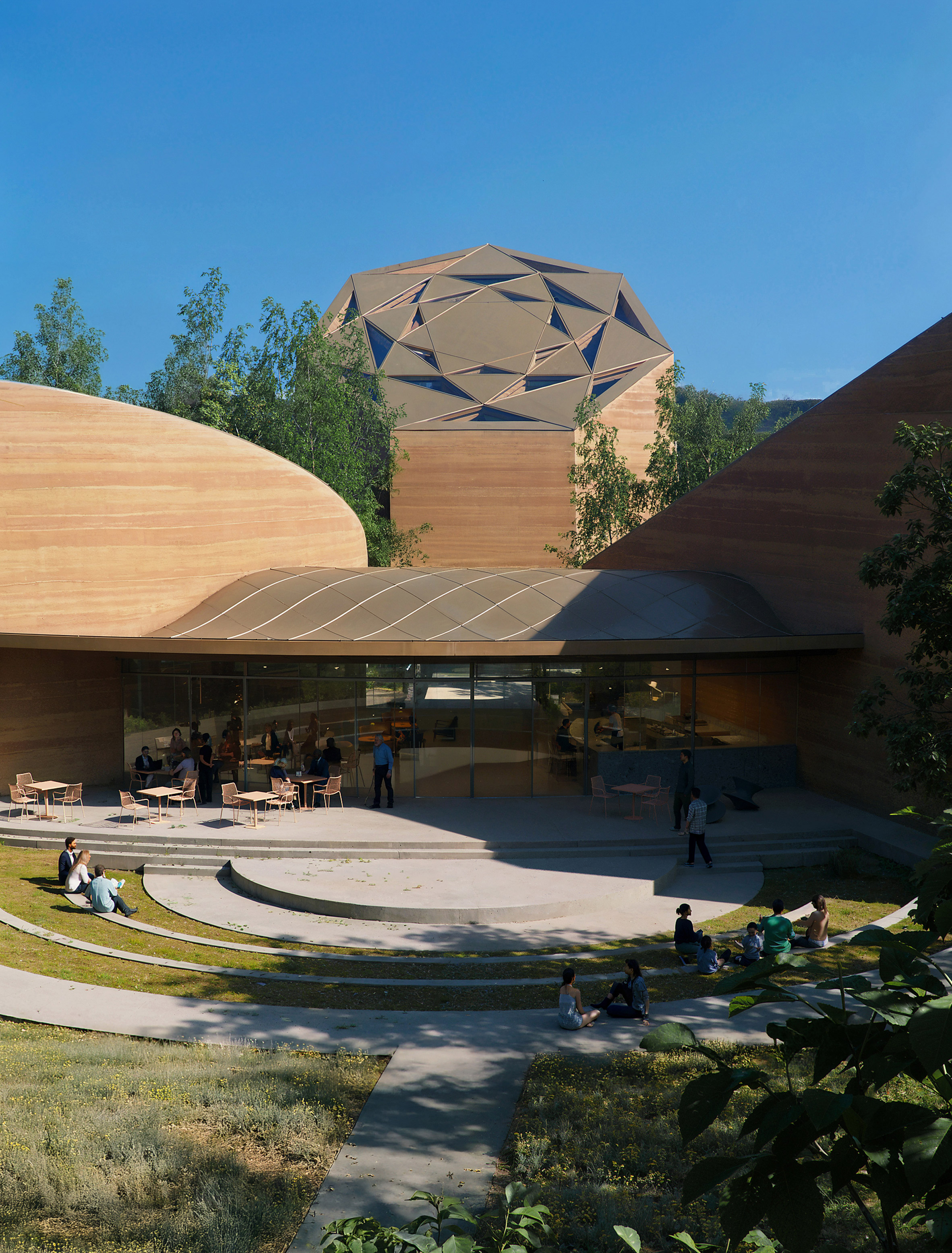
Other structures will be similarly covered with metal roofs in different patterns.
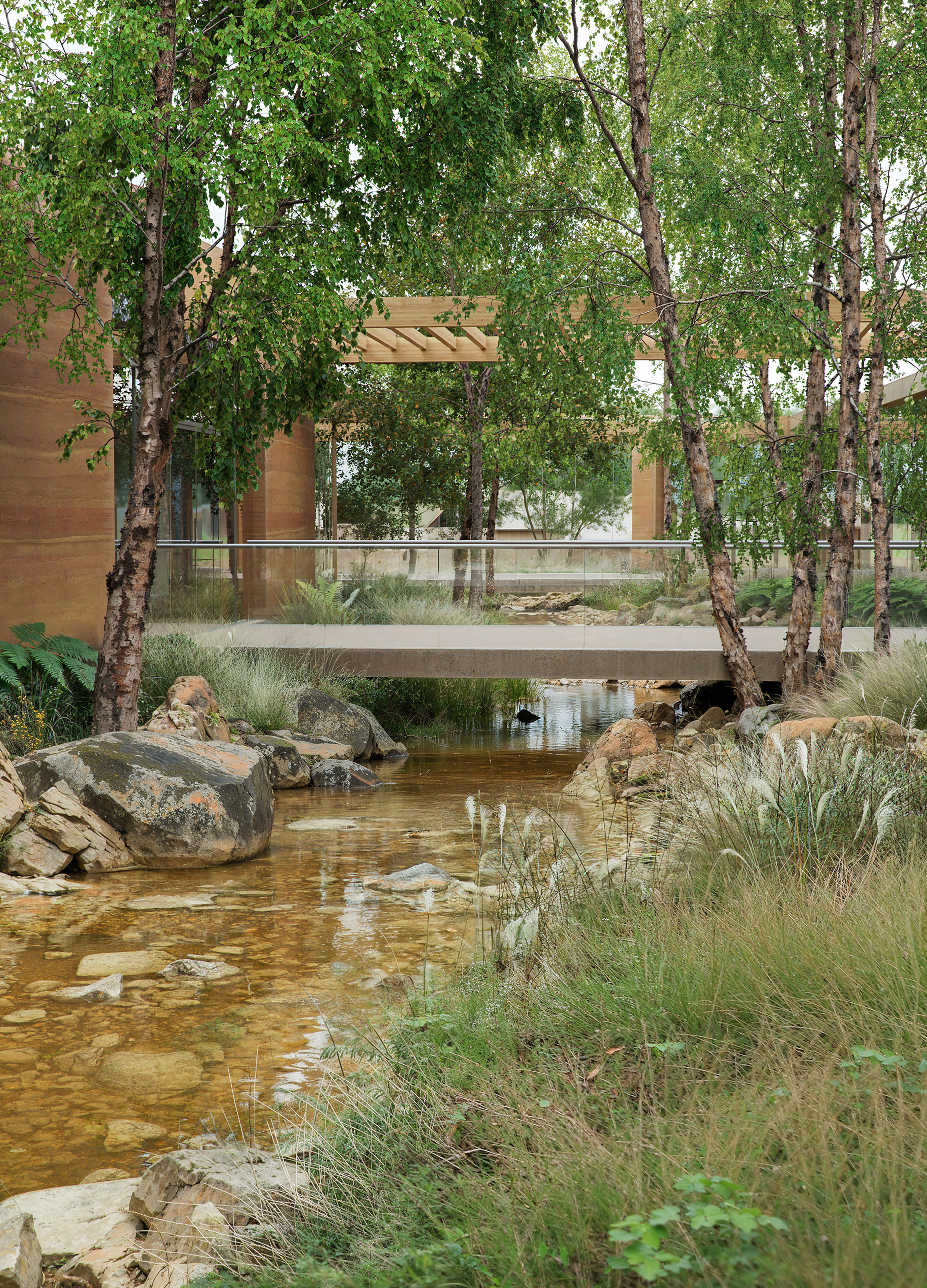
Small structures radiate out from the large hall. A bow-shaped covered walkway runs through the center of the building complex, following tree-lined streets that extend in either direction.
A bridge from a covered walkway crosses the stream and leads to two wide structures, one triangular and the other semicircular in plan. Both slope away from the central aisle, as does the Great Hall on the other side, giving the overall plan the impression of a valley.
There is a low-slung, ax-head-shaped volume between the triangular and semicircular structures that serve as gallery pavilions. The building will be capped with a wavy roof and glass walls will provide a backdrop for a beautiful outdoor amphitheater/gathering space.
The structure is the first phase of a vast construction project spanning 43 acres centered on the remaining pillars of the Cherokee nation’s first women’s seminary.
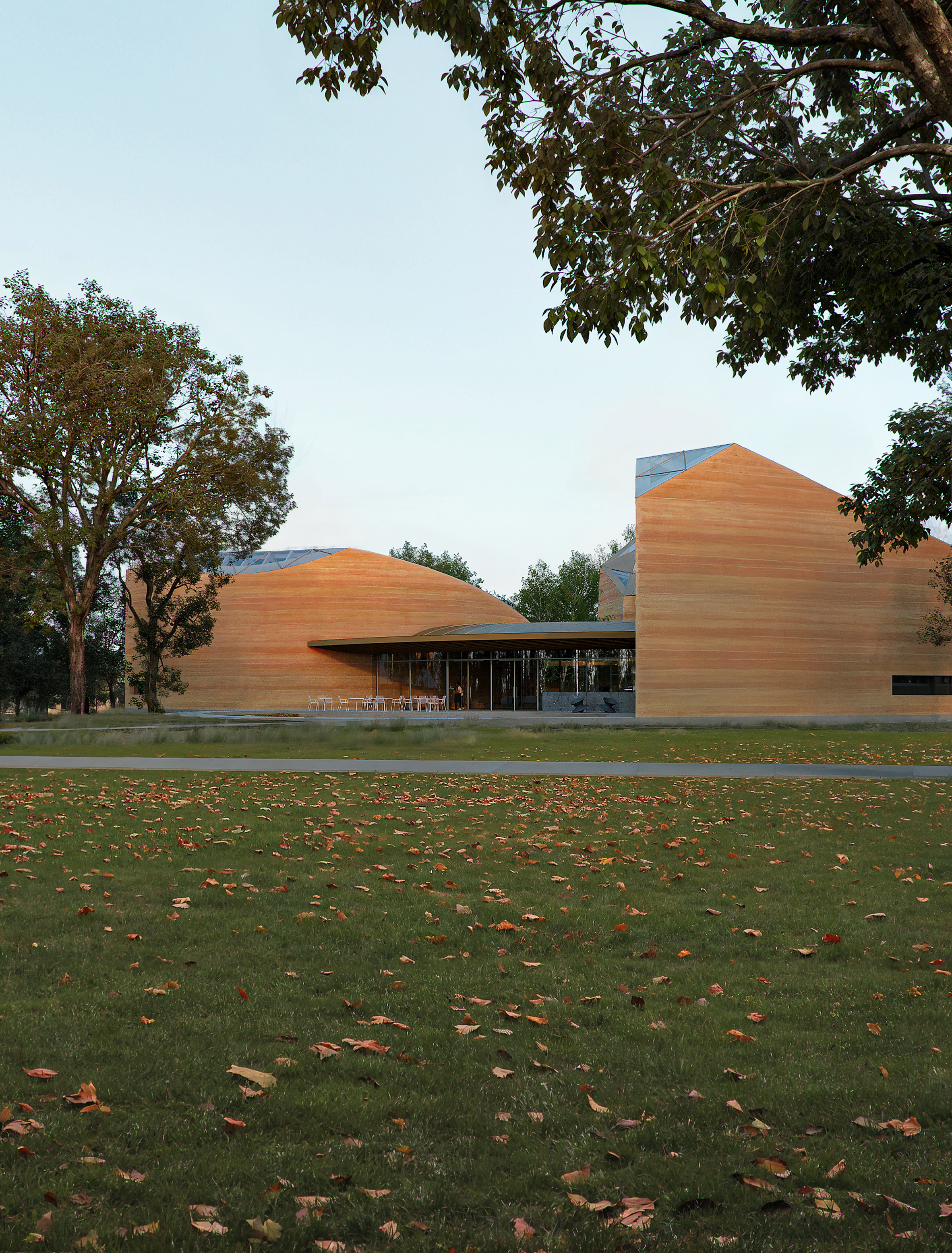
Safdie Architects is working on the project in collaboration with local studio Anishinaabe Design, while PWP Landscape Architecture will implement an extensive landscape design that brings the site’s natural assets to the fore and connects the interior and exterior of the site.
The landscaping work will connect the new center with the reconstructed traditional village and the Tsalagi Amphitheater, designed by Charles “Chief” Boyd, AIA’s first Cherokee architect.
Christine Neuhoff, president of the Cherokee National Historical Society, praised the studio’s efforts to date to understand the unique historical and cultural background of the Cherokee Nation, a semi-autonomous nation in the United States.
“They approached this work with humility, genuine curiosity, and deep respect for Cherokee culture and history,” Neuhoff said.
“They took the time to learn from our people and built trust through collaboration. Their willingness to listen and do right is reflected in every detail, and we couldn’t be more grateful.”
Since 2020, most of the cultural facilities have been closed in preparation for renovation works.
This structure is one of several in North America that strengthens the historical and contemporary resilience of Native American and indigenous communities.
In Vancouver, Canada, the Squamish Nation is building a skyscraper complex in the city, and in the U.S. state of Maine, the Penobscot Nation recently completed a mountaintop visitor center.
Image by Mir and courtesy of Safdie Architects.
#Safdie #Architects #designs #Cherokee #Heritage #Center #Oklahoma