
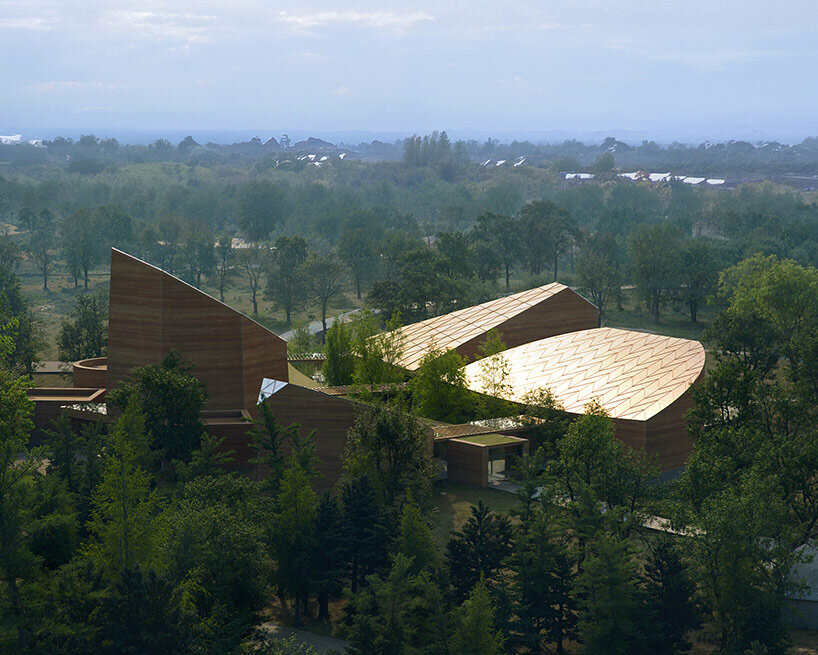
A campus that blends into the landscape
New Cherokee Heritage Center oklahoma by Safdie Architects A series of low faceted volumes are arranged within the wooded site, forming a campus close to the ground and following the topography. From a distance, the earth-toned building appears to be a collection of warm, earth-toned shapes, with sloping roofs catching light at different angles and tree canopies softening the edges.
Although each volume contains a separate program, the structure feels continuous. A path follows between the buildings, through woodlots and across shallow water. This layout encourages a gradual approach, with the architecture appearing in fragments rather than as a single, front-facing object.
Visualization © Mir, courtesy of Safdie Architects
architecture made from earth
The exterior of Safdie Architects’ Cherokee Heritage Center is defined by layered horizontal bands of earth-toned materials, giving the walls a subtle wood grain that varies in color from a sandy beige to a deep ocher. This material selection allows architect It provides a consistent surface across a variety of geometries while visually and physically grounding your project and connecting it to the surrounding soil.
Another language is introduced for roof shapes. Some volumes taper into sharp, angular peaks, while others curve gently, creating a contrast between the facets and rounded profile. In one of the central structures, a multifaceted skylight assembly covers the space, its triangular geometry filtering sunlight into the interior below.
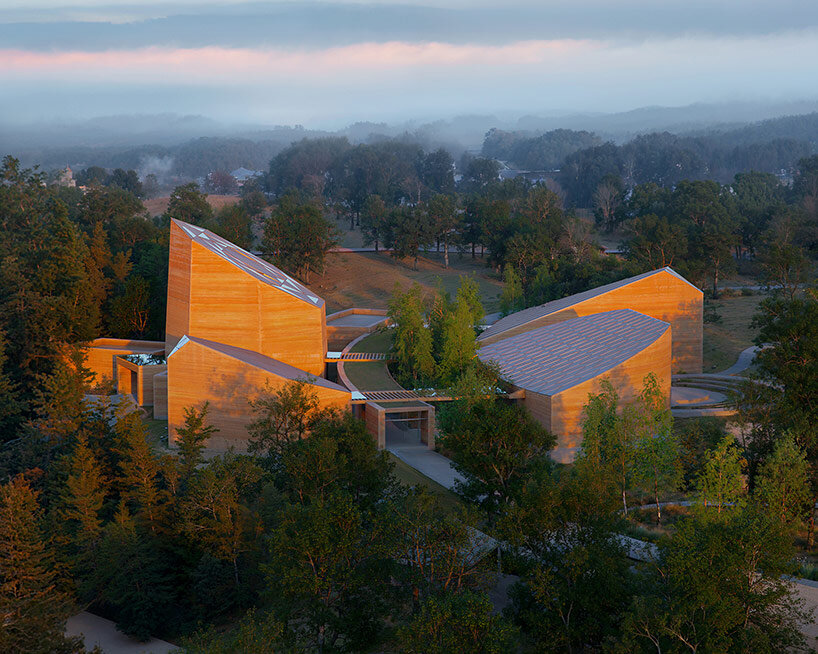
Safdie Architects organizes a series of earthy volumes across Oklahoma’s wooded landscape
Inside the planned Cherokee Heritage Center
In interiors, light is the main driving force in a space. In the high galleries, sunlight enters from above through patterned skylights, casting distinct patches of brightness that slowly move across the textured walls. The thickness of the earthen walls is clearly visible in the openings, and the depth of the openings reveals a framed view to the outside, reinforcing the sense of enclosure.
The circulation space remains open and legible. A glass wall along the ground floor connects the interior with the surrounding landscape, allowing you to maintain views of trees, water, and planted areas throughout your visit. Structural elements are kept to a minimum in these zones, with slender columns supporting an extended roof line and creating a shaded threshold.
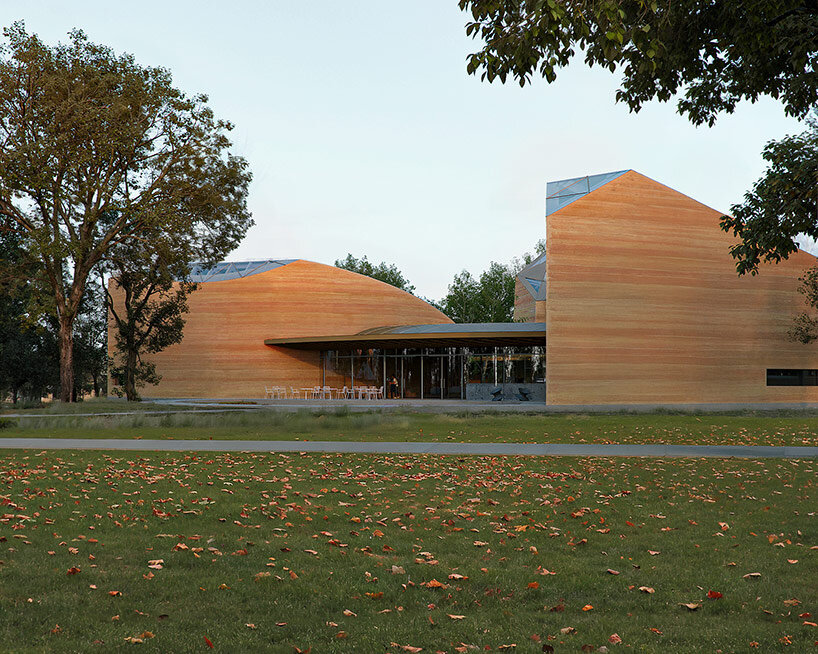
The multifaceted, curved roof shape creates a varied silhouette depending on the light and topography.
Site-wide connectivity
Bridges and covered walkways connect the buildings and allow the landscape to pass through while maintaining continuity. One pedestrian bridge crosses a shallow river, bringing visitors closer to the water and plants before returning to the constructed structure. These transitions between internal and external occur frequently to maintain the experience and interaction with the site.
Outdoor areas are treated as an extension of the architecture. The terrace has a gentle step from the indoor floor, and the seating blends into the terrain. This project allows you to avoid hard boundaries and instead blur the edges where glass, shade structures, and plantings overlap.
Public spaces such as cafes and gathering areas are located at the intersections of the paths. Here, larger spans and open glass create more transparency, with views extending across the lawn to the trees beyond. The curved roof above the cafe provides softer contours in contrast to the sharper volumes nearby.
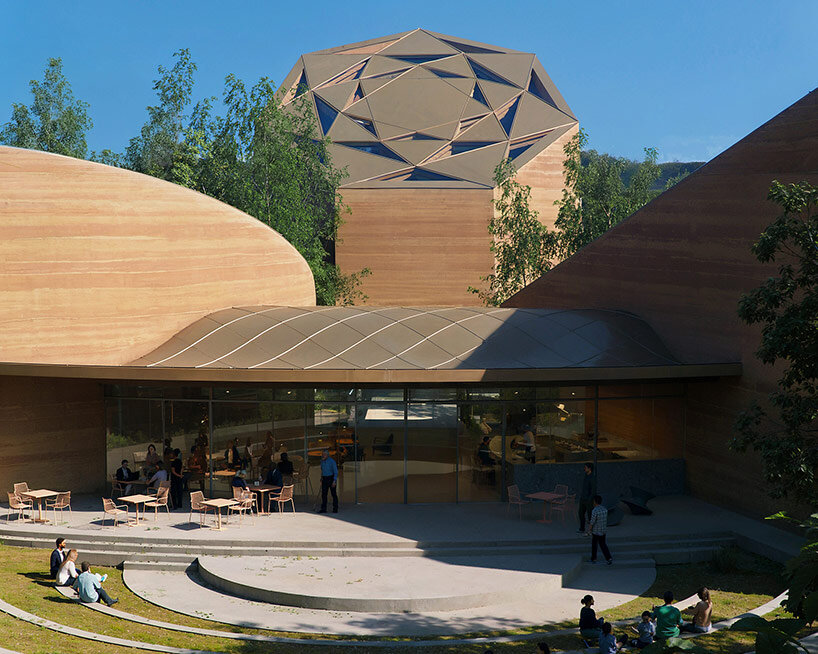
The campus is laid out as a network of paths that guide visitors through buildings and planted open spaces.
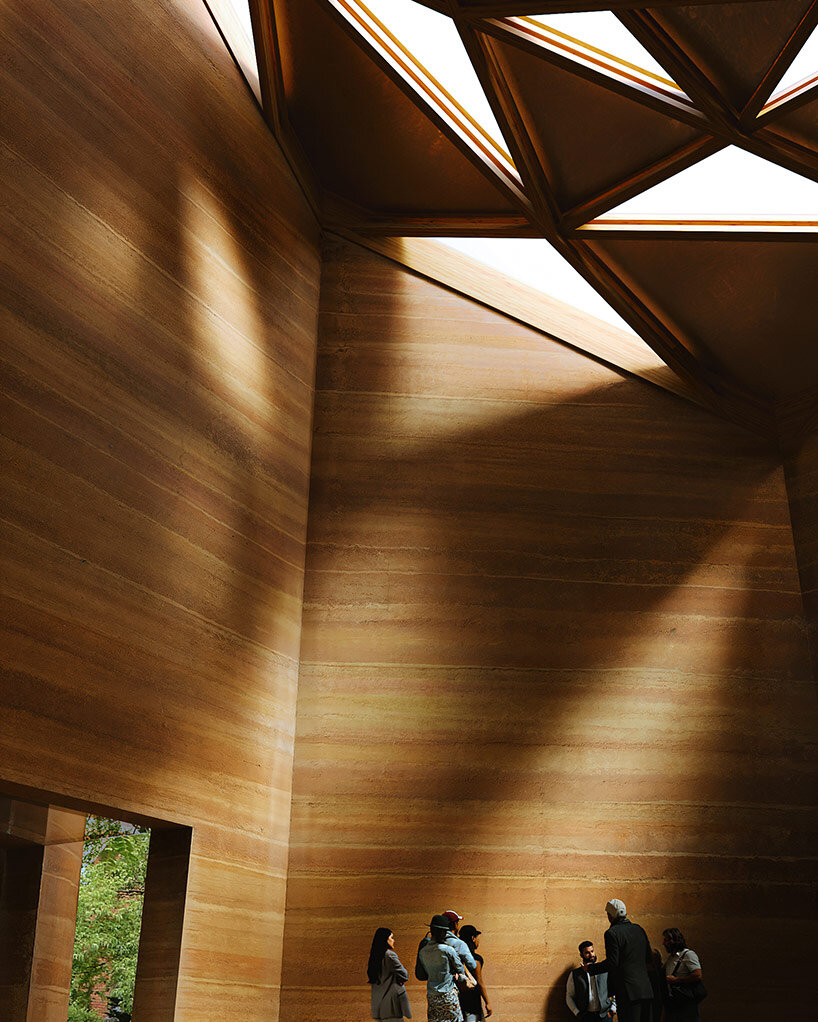
A central skylight volume filters sunlight through the triangular roof structure and into the gallery space.
#Safdie #architects #plan #Cherokee #Heritage #Center #collection #earthtoned #blocks