

Above: The entrance to the V&A East Museum on podium level. Architects O’Donnell + Tuomey incorporated benches into the façade to welcome people closer to the building.
Outside the V&A’s newest museum, an 18-foot bronze woman stands holding a mobile phone. She’s wearing sneakers and jeans, looking behind you into the middle distance without a care in the world. Mr. Thomas J. Price place beyondThe artist’s tallest sculpture to date will greet visitors at the V&A East Museum, which opens this Saturday in London’s Queen Elizabeth Olympic Park. The statue is a disarmingly casual welcome to a major state institution and a look inside.
More than a decade in the making, the V&A East Museum is the second of two new V&A properties in Stratford, following the opening of the V&A East Storehouse in May last year. Together they are supporting the Eastbank, a cultural precinct rising from the legacy of the 2012 Olympics, with £640m of support from the Mayor of London.
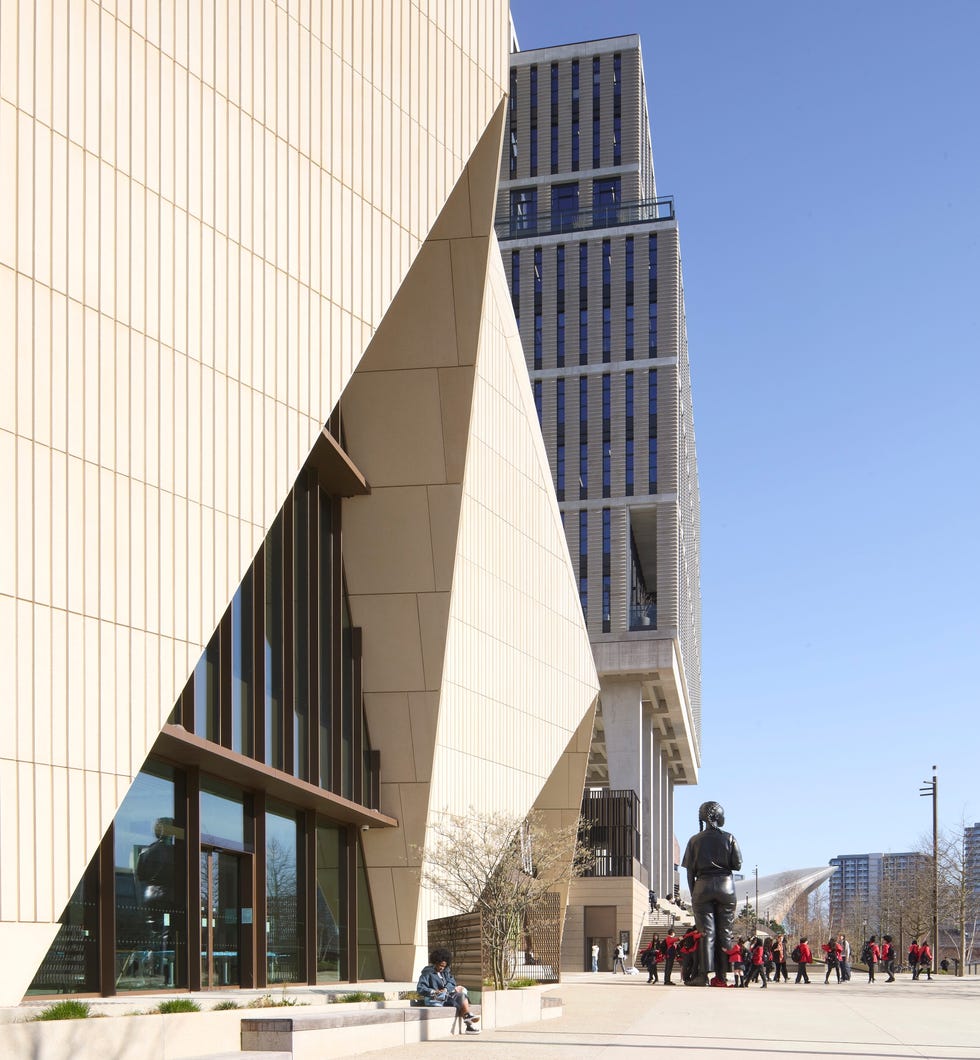
The entrance to the V&A East Museum faces the East Bank waterfront plaza and features an 18-foot-tall sculpture by Thomas J. Price.
The building was designed by RIBA Royal Gold Medal-winning Dublin architectural firm O’Donnell + Tuomey, behind London’s Photographers Gallery and LSE Student Center. A five-story grid-shaped precast concrete tower rises over the square. “Precast concrete has been at the heart of the project from the beginning, chosen for its robustness, durability and civic presence,” says John Tuomey, the company’s founding director. “The facade panels are detailed to look like stone rather than concrete, giving the building a sense of permanence and establishing a quiet dialogue with the V&A in South Kensington.”
Inside, terrazzo concrete floors extend the Olympic Park’s material palette into the galleries. There are two entrances instead of a single ceremonial front door, and benches built into the base of the building encourage visitors to sit and stay. Tuomey wanted the exterior to convey “a sense of invitation, of curiosity, of encouragement to go inside and explore.” “It was important that the building felt distinctly public and welcoming,” he says.
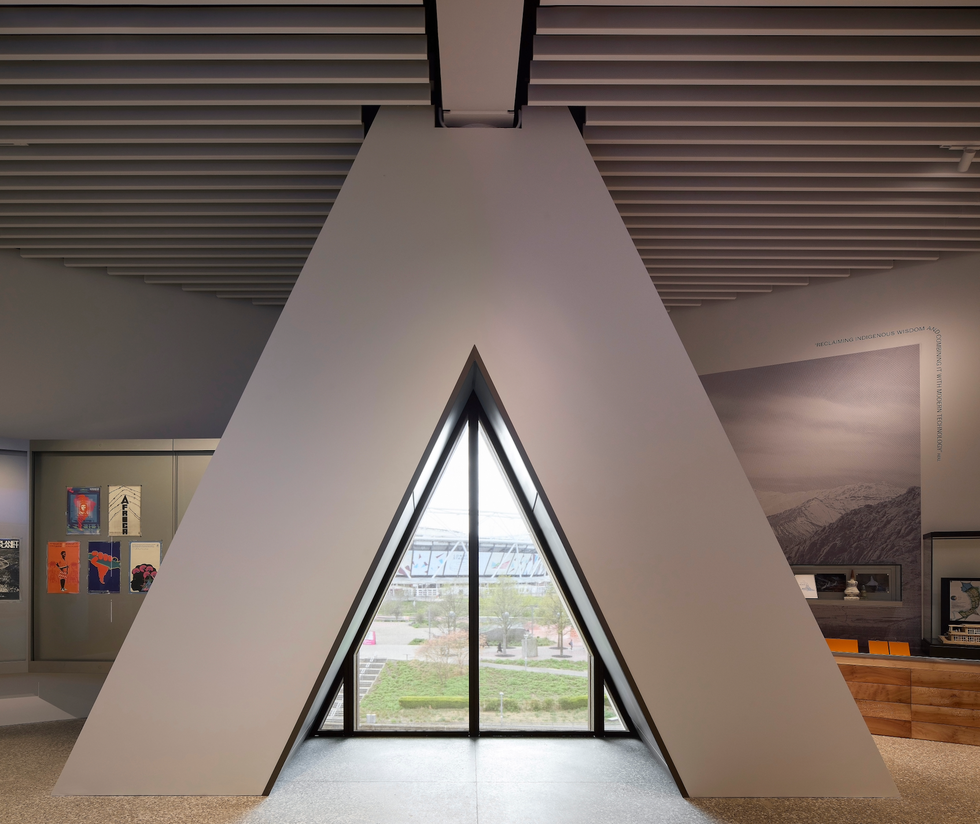
The windows in the Why We Make gallery on the second floor overlook Queen Elizabeth Olympic Park.
That openness extends to the relationship between the building and the outdoors. Many of the collections require careful light control, and O’Donnell + Tuomey wanted to ensure that visitors never strayed outside the park. “Carefully placed windows on landings and circulation spaces allow light to filter in at key moments, creating moments for pause, reflection, and social conversation,” says Tuomey.
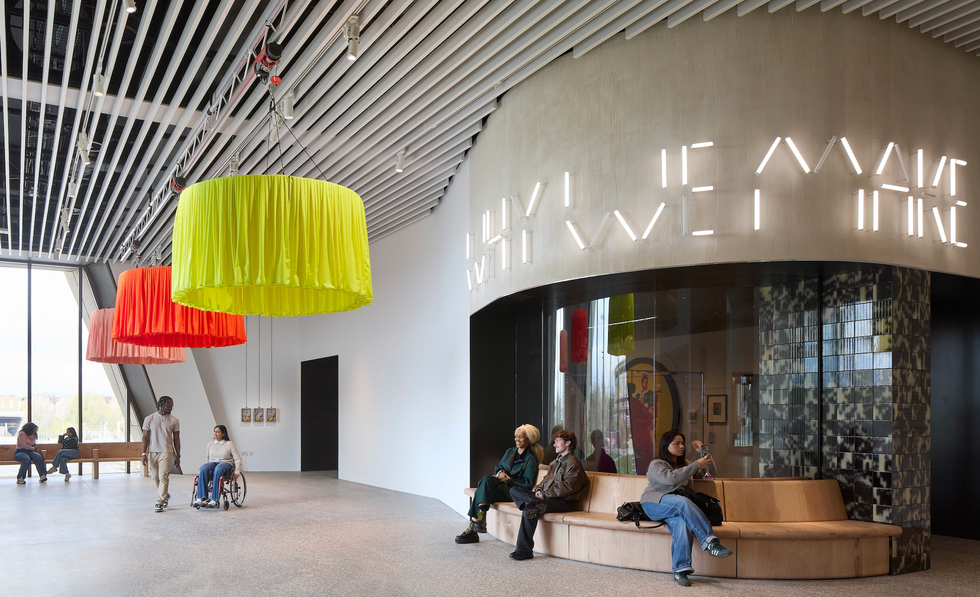
Entrance to the spacious public circulation space designed by O’Donnell + Tuomey and the permanent Why We Make Gallery designed by JA Projects.
The museum’s collection matches the building’s ambitions. Together, the two free permanent galleries; why we makewhich houses over 500 objects spanning art, architecture, design, performance, and fashion. JA Projects designed the gallery with A Practice for Everyday Life, artist Larry Achiampong, and the V&A East Youth Collective, a group of young people from East London’s Olympic district. Jen McLachlan, project director at V&A East, says from the outset the team conceived the museum’s design, collections and program with east London’s young people in mind.
The curatorial approach sets it apart from the disciplined galleries of South Kensington. Rather than classifying objects by era or material, curators group objects across geography and timelines. Furniture by contemporary artist Yinka Ilori sits alongside carnival costumes by artist Keith Kahn and fashion by Alexander McQueen. McLachlan describes galleries as “spaces that resonate with young people,” and likens them to “layered cityscapes.”
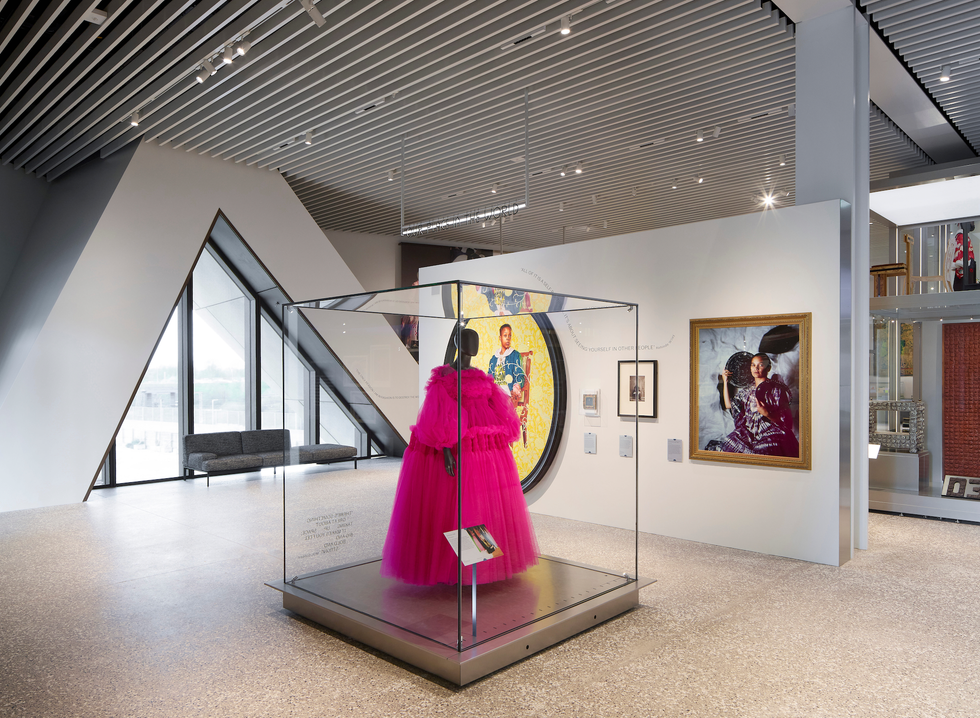
A permanent “Why We Create” gallery designed by JA Project.
Museum opening commemorative exhibition, The Music is Black: A British Storyis the largest ever exhibition on the influence of black British music. It traces 125 years of history across eight genres, from 2 Tone to Jungle, Trip Hop, UK Garage and Grime. The collection of over 200 items includes Stormzy’s 2019 Glastonbury anti-shake vest (designed by Banksy and originally sketched on a napkin), Joan Armatrading’s childhood guitar, Groover Rider’s first turntable and fashion worn by The Shard, Little Sims and Dame Shirley Bassey. The V&A also acquired more than 50 photographs for the show, from an early shot of Bob Marley by Dennis Morris to Laura “Hyperfrank” Brosnan’s photo of Skepta’s family celebrating his 2016 Mercury Prize win.
The museum is open today and everyone can enter for free. The park is now connected to the Olympic Park area, which includes Dance Theater, Sadler’s Wells East, London College of Fashion, UCL (University College London), and the BBC Music Studios is due to open in the future. East London’s cultural map is very different than it was a decade ago, and residents and visitors alike have new reasons to pay attention.

Julia Cancilla is ELLE Decor’s social media and news editor, overseeing the brand’s social and covering design, pop culture, and emerging trends. She also writes the monthly ELLE Decorscope column. Her work has appeared in Inked magazine, House Beautiful, Marie Claire, and more.
#VAs #East #London #Museum #feel