Maverick Photographer’s 1960s Wildlife Photography Documents Endangered Animals

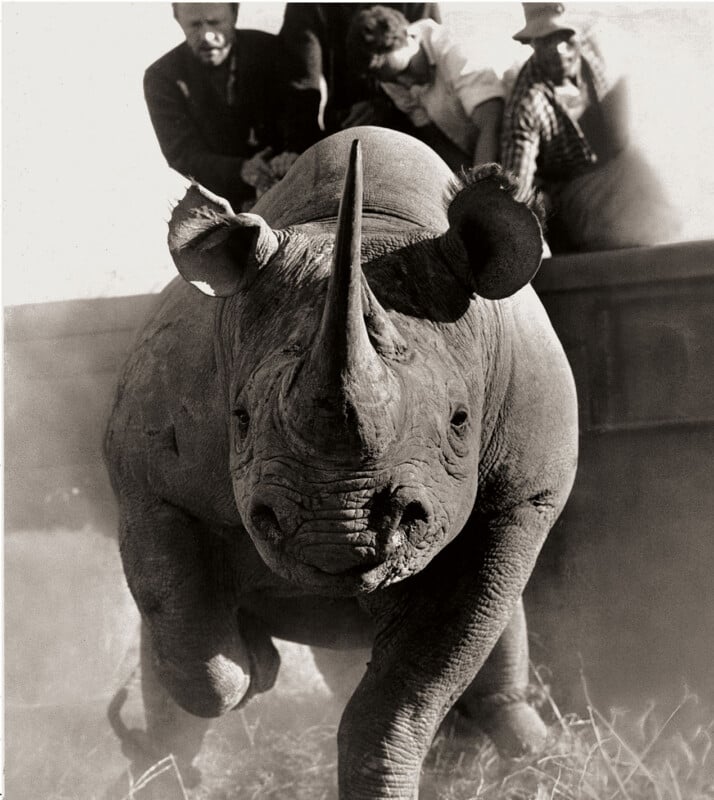
Peter Beard, Ken Randall and Rope Hunting Rhino Block 29, 1964 © The Estate of Peter Beard, courtesy of Peter Beard Studio, www.peterbeard.com

Peter Beard is a unique and often confusing figure in the history of wildlife photography. But undoubtedly his book end of the game, It remains one of the most important pieces of early conservation work.

Described as a groundbreaking visual exploration of Africa, end of the game It combines photography and field observations with a documentary approach to the ecosystem changes and degradation that affected tens of thousands of elephants, rhinos, and hippos in Kenya’s Amboseli National Park and Uganda in the 1960s and 1970s.

Researched and edited for more than 20 years, and updated several times since its original publication, this book is an almost classic and powerful testament to the damage caused by human intervention in African ecosystems. Its images and text are supplemented by historical photographs of explorers, missionaries, and photographers, as well as quotes from adventurers and observers who witnessed the continent’s changes.
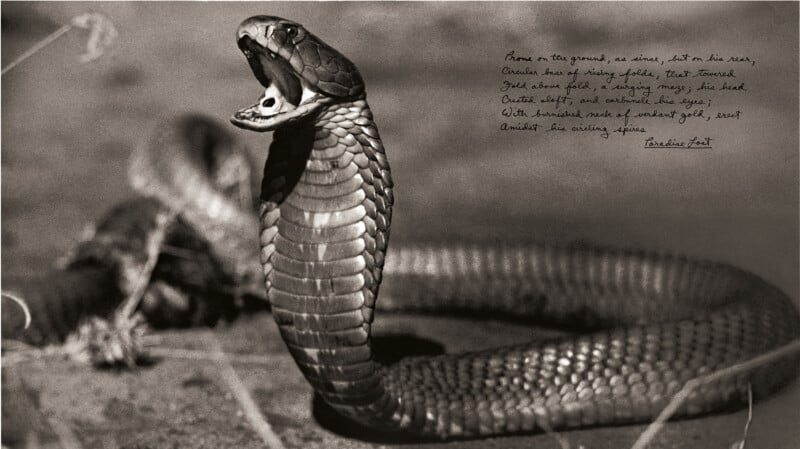
A black and white photo of a cobra that appears to be making hissing noises with its hood spread and mouth open. Handwritten text appears in the upper right corner of the image. The background is blurred.
Peter Beard, The Spitting Cobra, Mortally Wounded, Always Seeking Vengeance, Tsavo Before Death, 1972 © The Estate of Peter Beard, courtesy of Peter Beard Studio, www.peterbeard.com
With a lush forest in the background, a person crouches among the dense green leaves with a large, curved ivory tusk.
Peter Beard, world record bull elephant tusk Elui, 47 pounds, Marsabit Forest, Kenya, 1966. © The Estate of Peter Beard, provided by Peter Beard Studio, www.peterbeard.com
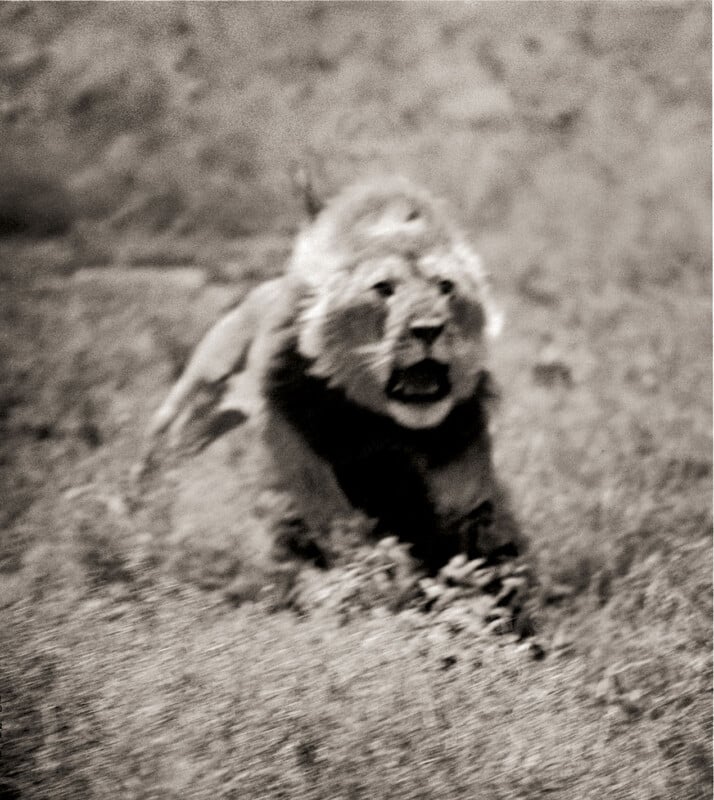
Blurry black and white photo of a lion running through tall grass with its mouth open. It probably roars or gasps, capturing movement and intensity.
Peter Beard, Ndutu Lion (Lion Charge), 1976. © The Estate of Peter Beard, provided by Peter Beard Studio, www.peterbeard.com
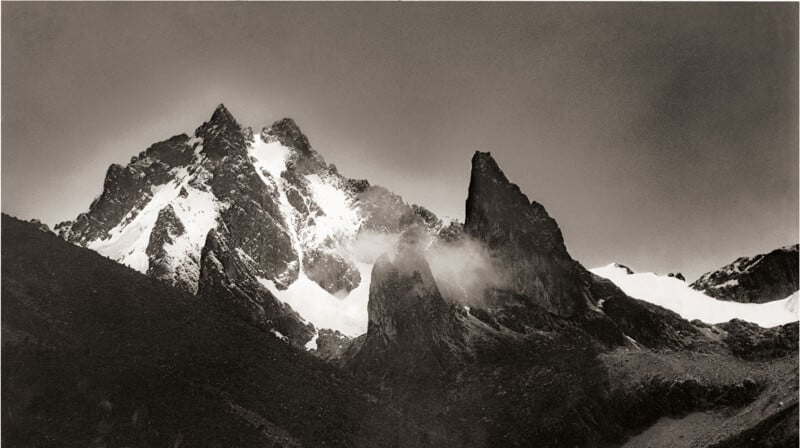
Snow-capped mountain peaks with rugged, jagged edges rise sharply against the cloudy sky. Fog and clouds drift around the rocky peaks, highlighting the dramatic and contrasting landscape.
Peter Beard, Kirima Kirinyaga, and the twin-peaked Kenyaa. Diamond Glacier, the bottom of Ngai, between Mbatian and Nerion, named by Sir Halford Mackinder, © The Estate of Peter Beard. Provided by: Peter Beard Studio, www.peterbeard.com
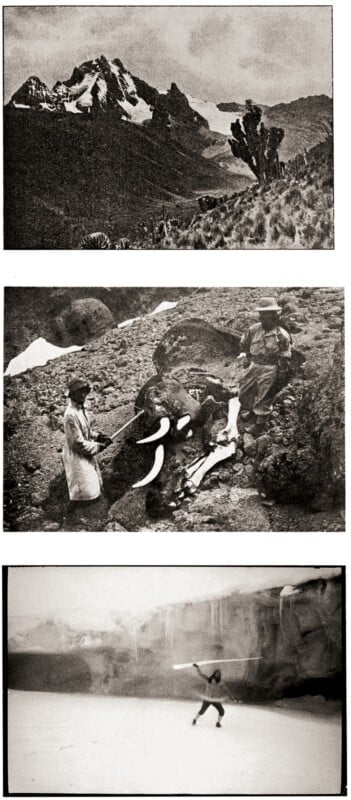
A collage of three vintage photos: a snow-capped mountain peak, two people cutting meat from a large animal carcass, and a person balancing on the snow in front of a train and industrial background.
(Top to Bottom) Mountain Madness of 1899 on Mt Kenya, 16,000 ft. Elephant, Curling Pond below Lenana. © Property of Peter Beard. Provided by: Peter Beard Studio, www.peterbeard.com
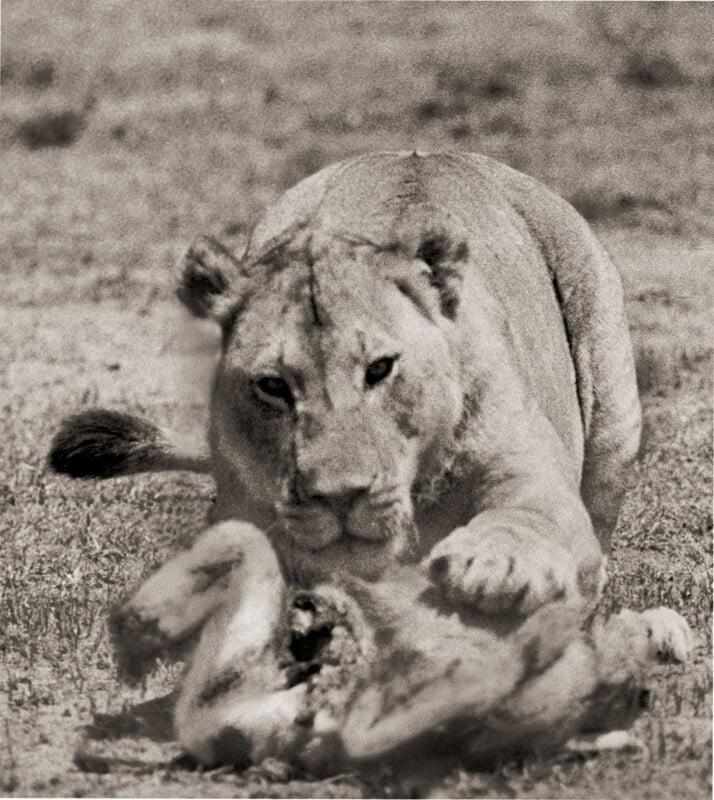
A lioness is crouching in a grassy area and eating a carcass. The gaze is focused forward, and one foot is placed on the prey. The image is black and white.
Lion, Peter Beard © The Estate of Peter Beard, courtesy of Peter Beard Studio, www.peterbeard.com
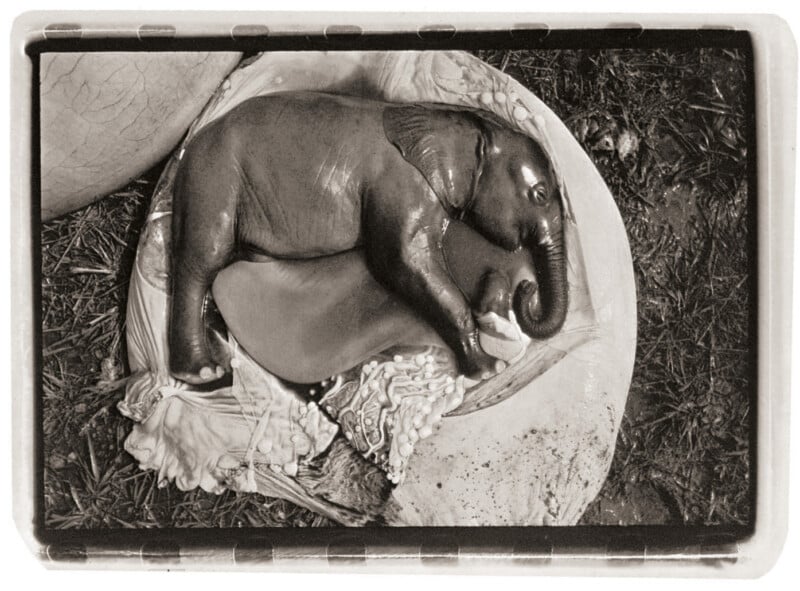
Black and white image of a newborn elephant calf lying on the grass curled up in a partially open amniotic sac. The umbilical cord and placenta can be seen nearby.
Peter Beard, Elephant Fetus, Uganda, 1966 © The Estate of Peter Beard, courtesy of Peter Beard Studio, www.peterbeard.com

Who is Peter Beard?

Peter Beard is an American photographer, diarist, and art figure who has built a career and myth around his obsessive documentation of life, wildlife, and himself. In 1996, he was trampled and seriously injured by an elephant.

Born into a wealthy family in New York, he lived much of his life in Kenya, particularly around Tsavo National Park, moving between high society and the wilderness. There he created some of his most influential works, including: end of the gameused a striking and experimental photocollage technique to document the collapse of elephant populations and broader environmental distortions. This book helped redefine what documentary photography could be, while promoting early awareness of conservation issues.

In addition to his work, Beard traveled the art, fashion, and celebrity worlds in and around New York, becoming known for his chaotic and flamboyant lifestyle and developing a reputation as a wild man, Lothario. His diary and photographic works were deeply personal, often layered with paint, writing, and even blood, turning them into hybrid objects of art and autobiography.

He suffered from poor health and passed away in 2020 at the age of 82.
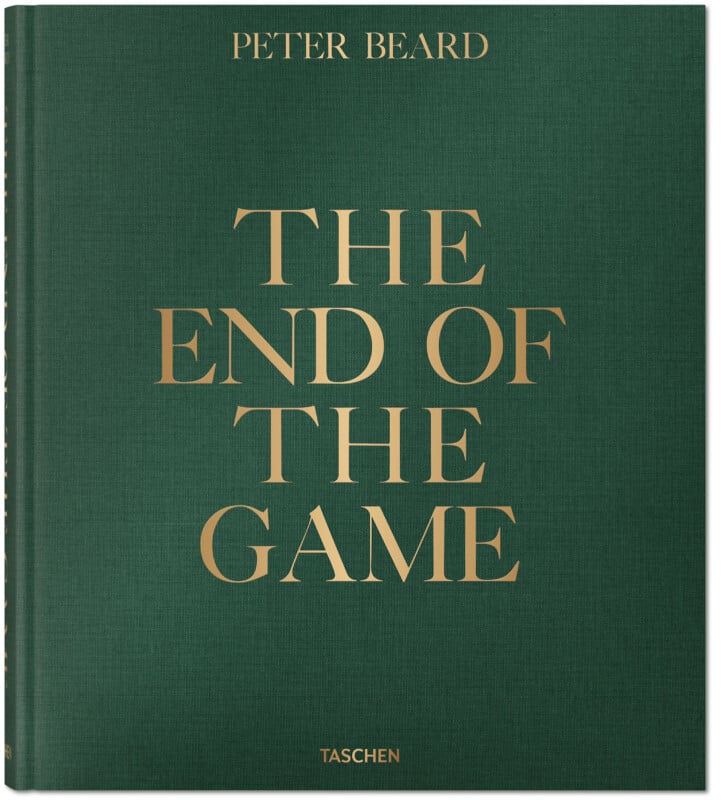
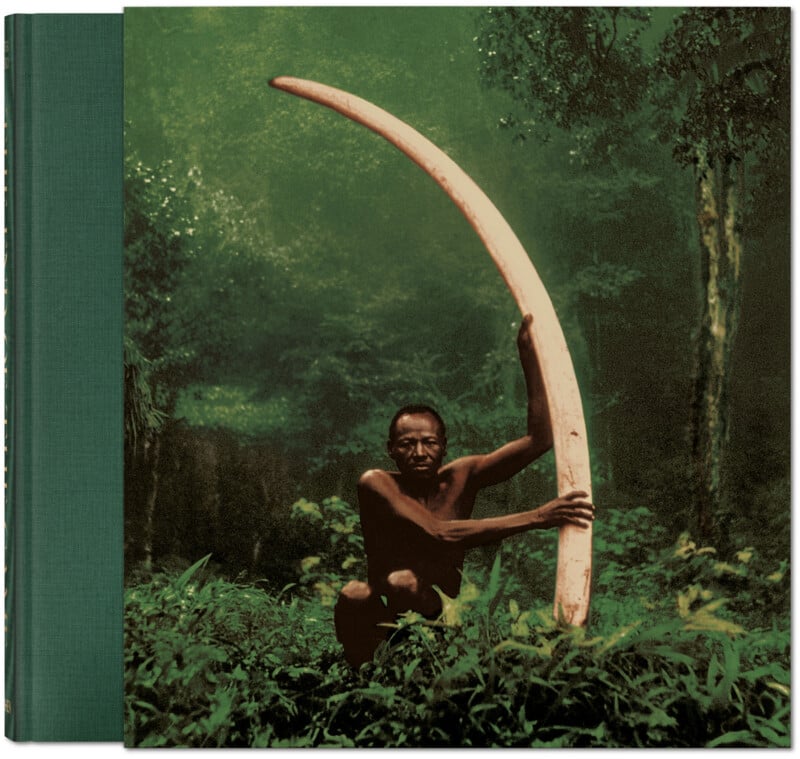
There are golden letters written on the cover of the green book. "peter beard" At the top, "end of the game" In large letters in the center, "bag" It's at the bottom.

new edition of Peter Beard. end of the game ” is published by Taschen and is available for pre-order now.

#Maverick #Photographers #1960s #Wildlife #Photography #Documents #Endangered #Animals

Leave a Comment