
The most surprising exhibit at the latest blockbuster fashion show at London’s Victoria & Albert Museum (V&A), which opened on March 28th, is a very quiet sweater. Stocking stitch fine gauge thread with white on black floating across the inner rows, catching every few stitches and showing sparks. On the neck there is a rustic sketch of a collar with a soft ribbon, the black outline is filled with white. Almost a century old, but always modern.
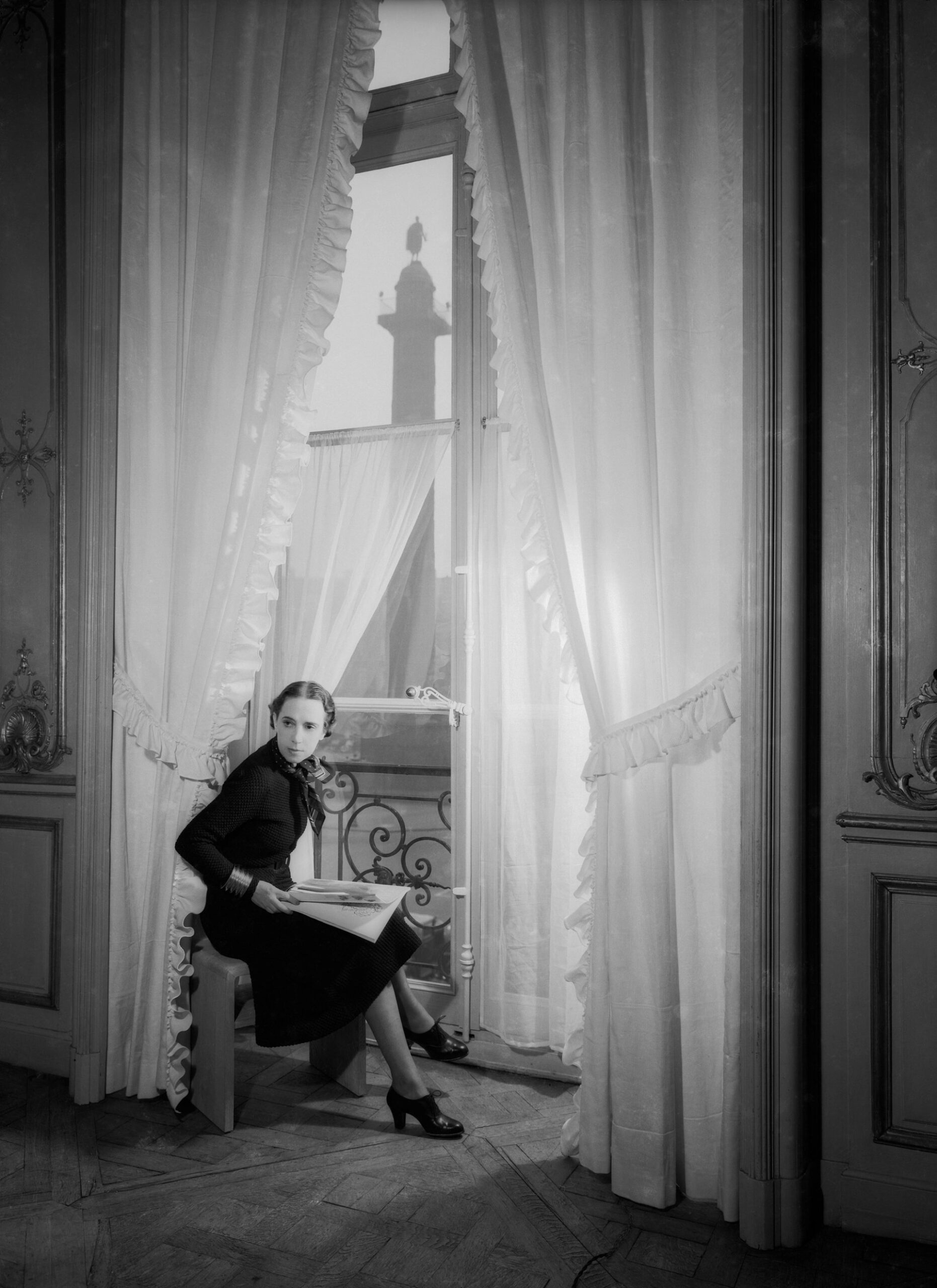
Schiaparelli, photography Harper’s Bazaar At a boutique in Paris in 1935 Photo: François Kollar © GrandPalaisRmn—Copyright Management by François Kollar
This sweater changed Elsa Schiaparelli’s life and Parisian fashion, as her designs made the latest art movements and haute couture interactive. The V&A show tells this little-known story and explains her once prominent role. In the late 1920s and 1930s, Schiaparelli was fashion’s present and possible future, while her rival Gabrielle “Coco” Chanel was beginning to feel like a recent past.
Unlike Gabrielle Chanel’s “poor seamstress and rich mistress” origin story, Schiaparelli was born in Rome in 1890 to an aristocratic mother and an academic father, both wealthy. By the age of 24, she was the daughter of a rebel, then a wife, mother, and divorced from a fugitive con artist husband in England and the United States. In 1927, at the age of 37, she returned to Paris, where she had easy access to the city’s most provocative art circles. There, Dadaist absurdity was complemented by Surrealist fantasy.
Schiaparelli did not simply borrow from Surrealism. she translated it into real life
Francesco Pastore, Schiaparelli
Schiaparelli was also welcomed among the enlightened crowd, which included Americans living in France seeking art, fashion, and entertainment. Before the war, couturier Paul Poiret, who removed corsets, stripped layers, and stripped women’s upholstery from women’s bodies, encouraged her exciting ideas about clothing. She couldn’t sew a hat or cut out a pattern, and her early experiments with wearing dresses by draping fabric around her body were hit or miss. Still, her ideas didn’t stop flowing.
One of the ideas was to order a sweater similar to one she had worn on a friend. The sweater maintained a cylindrical shape from shoulder to waist (the ideal silhouette of 1927) without clinging or sagging. The inner strand was the secret to steady state. That friend introduced Schiaparelli to Arousiag “Mike” Mikaelian, an Armenian refugee who is a knitter. Ms. Schiaparelli explained things to Ms. Schiaparelli through an interpreter and gave her a drawing of a bow, which she called “childish,” and the two persisted until Ms. Schiaparelli understood Mr. Schiaparelli’s request. And now we have an elegant joke about reality and unreality. “Schiaparelli didn’t borrow from surrealism; she translated it into the real world,” says Francesco Pastore, head of traditional culture at the Schiaparelli fashion house, which was revived in 2012 and has been under the creative direction of Daniel Rosebery since 2019.
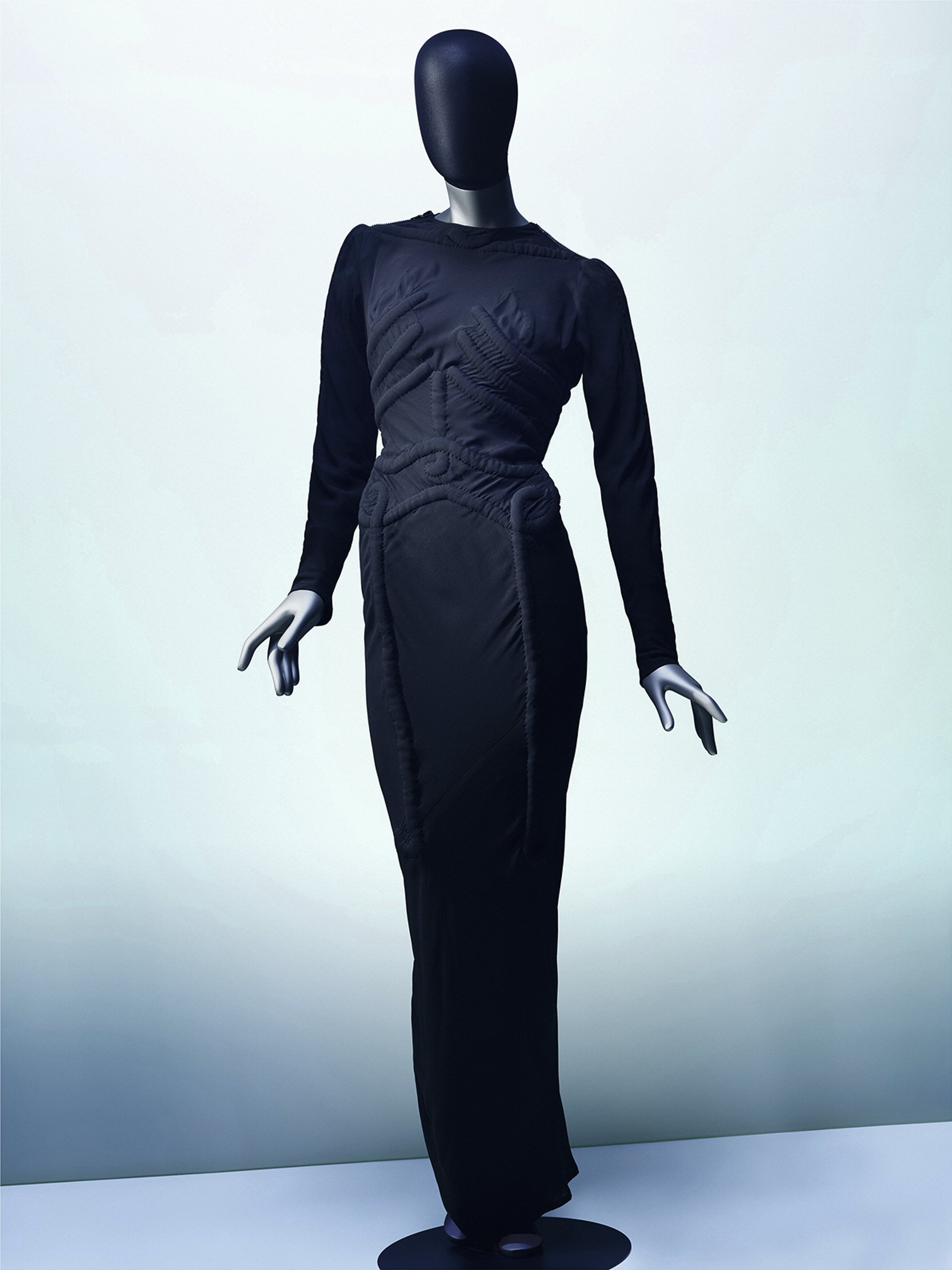
of skeleton dressIt was designed by Elsa Schiaparelli and Salvador Dali in 1938. Photo: © Emile Larsson; V&A © 2025; Salvador Dali, Gala Salvador Dali Foundation, DACS
Schiaparelli achieved this through graphic design. Animation was one of the major forms of entertainment in the 1920s. It’s no coincidence that also in 1927, Walt Disney debuted Mickey Mouse’s predecessor, Oswald the Lucky Rabbit, creating a world in which the character’s body and clothing were a unified image. Schiaparelli herself also struck cartoonish poses in the photo, and her famous knitted hat, the “mad cap,” could be worn in hundreds of crazy ways to change the shape of her head in an animated way.
First fast fashion
Its original, almost abstract sweater was given physical expression through a collaboration with one of the Parisian craft companies. Many of the companies were headed by talented decorative artists. When Schiaparelli wore the trophy to lunch, a buyer at an American department store placed an order for 40 pieces, complete with a neat pleated skirt, to be delivered within two weeks. Schiaparelli bought the fabric for the skirt at the bargain counter at Galeries Lafayette, Mikalian commissioned all the talented artisans in the diaspora to knit it, and the sweater went to New York, where the idea was cheaply copied by hand, machine, and DIY patterns. It can be said that it foreshadowed the concept of instant fashion, which could be worn on the spur of the moment.
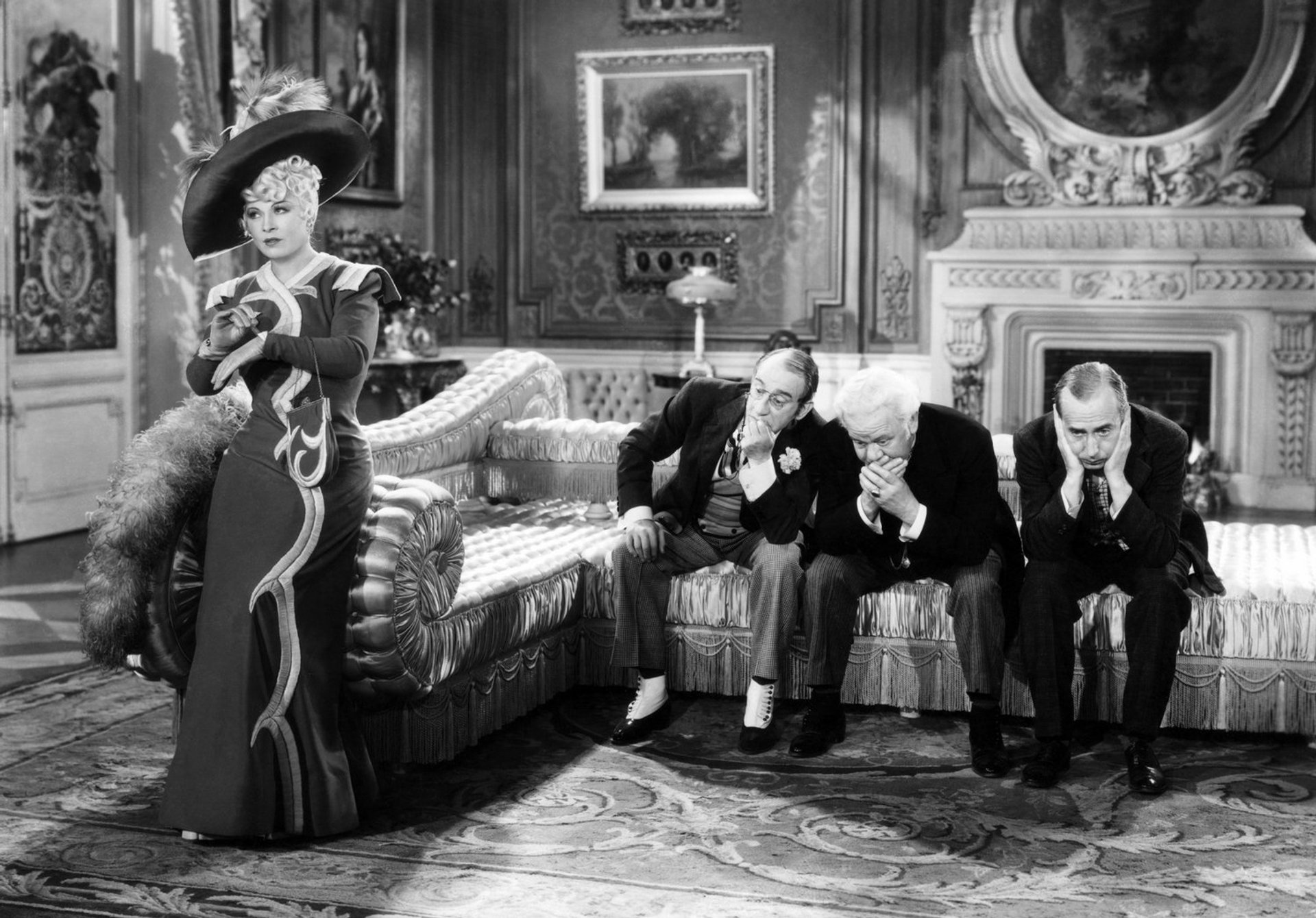
In the 1937 film, every day is a holidayMae West wore a Schiaparelli design Moviestore Collection Ltd/Alamy Stock Photo
Schiaparelli founded his business as a luxury sportswear boutique based on the sequential development of sweaters, extending graphics into accessories and knits into intricate textures. This foresaw and popularized the unusual surface pattern weaving that major fabric companies began to commission. Almost a generation earlier, an equally inexperienced Chanel had made a bold move into haute couture with her designs. sporty Layer a cardigan over a simple machine-knit jersey dress or skirt. Their poverty and frugality of luxury appealed to young men of action.
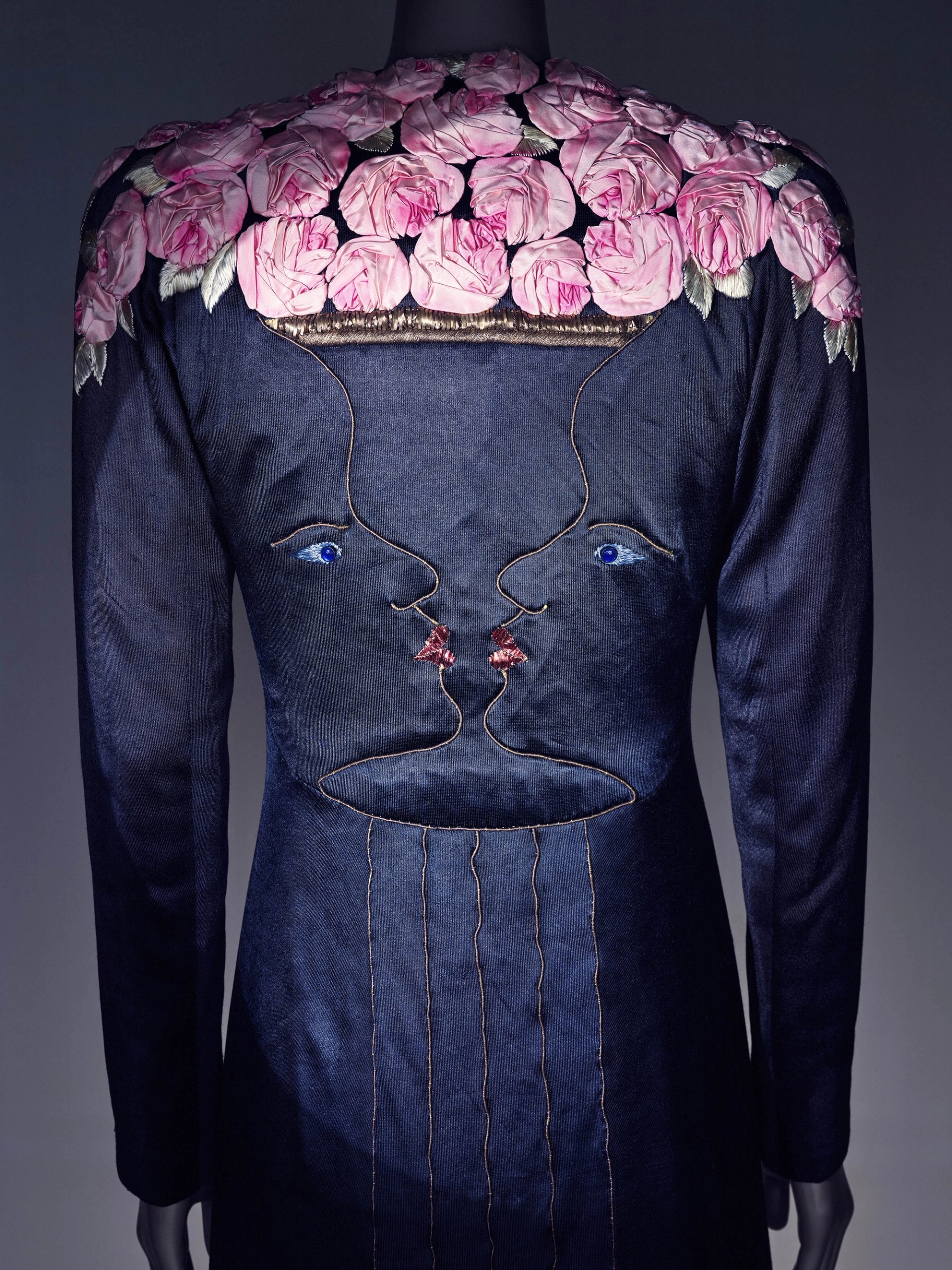
In 1938, Schiaparelli created a coat with Jean Cocteau. Photo: © Emile Larsson; © 2025 ADAGP DACS Comite Cocteau, Paris
Chanel limited its interest in the arts to sponsoring creators, including Sergei Diaghilev, director of the Ballets Russes, and called Schiaparelli, an upstart company that grew into a full couture house, “an Italian artist who makes clothes.” The jibe was meant to be mocking, but it was actually accurate. Schiaparelli was an artist, and in addition to all the raw ideas he absorbed in his curious life, he had a quick reaction to the latest discoveries. Interesting concepts flowed from her and made their way into the hands of skilled artisans, including tweed with woven feathers and swimsuits with bras. Zodiac embroidery grew out of a childhood interest in astrology, and plastic zippers were prominently displayed. The costume jewelry was constructed from mirror shards, and the cloak was made from clear cellophane. Thanks to Schiaparelli, “the unconscious has become wearable,” Pastore said.
Schiaparelli used the artist’s images beyond decoration. it was a shared imagination
Francesco Pastore, Schiaparelli
Her pieces were worn to express impromptu wit and joke-telling confidence. The ‘hard chic’ of the 1930s suited sophisticated people like the scandalous Daisy Fellows and Wallis Simpson, who became the Duchess of Windsor after her divorce. In Picasso’s 1937 Portrait of Neuches Éluard, the wife of poet Paul Éluard wears an Elsa design. Schiaparelli’s provocative costumes, meant for women who bite and joke, were much copied in Hollywood for leading screwball comedians. She designed Mae West’s costumes, but had to blend West’s burgeoning curves into the set decorations, blurring them with fur and feathers. Now, Rosebery’s provocative work appears to be in keeping with Schiaparelli’s showgirl, or showwoman, mannerisms and her desire to push things to the extreme.
Surprise rather than seduce
Schiaparelli himself preferred to surprise rather than seduce. The sketches Jean Cocteau made for Chanel were enchanting portraits of Coco herself, but the profiles of the two girls outlined in the vases he gave Schiaparelli were quickly translated into clothing by the embroidery genius Albert Lesage. Stitching outlines the back of the evening coat, and roses embroidered with thick ribbons emerge from a vase. “Schiaparelli’s use of artists’ images went beyond decoration,” Pastore says. “It was a shared imagination. While her friend Salvador Dali painted people with flowers on their heads, Schiaparelli herself once placed flower seeds in her nose and mouth as a child in hopes that beautiful flowers would grow from her face.”
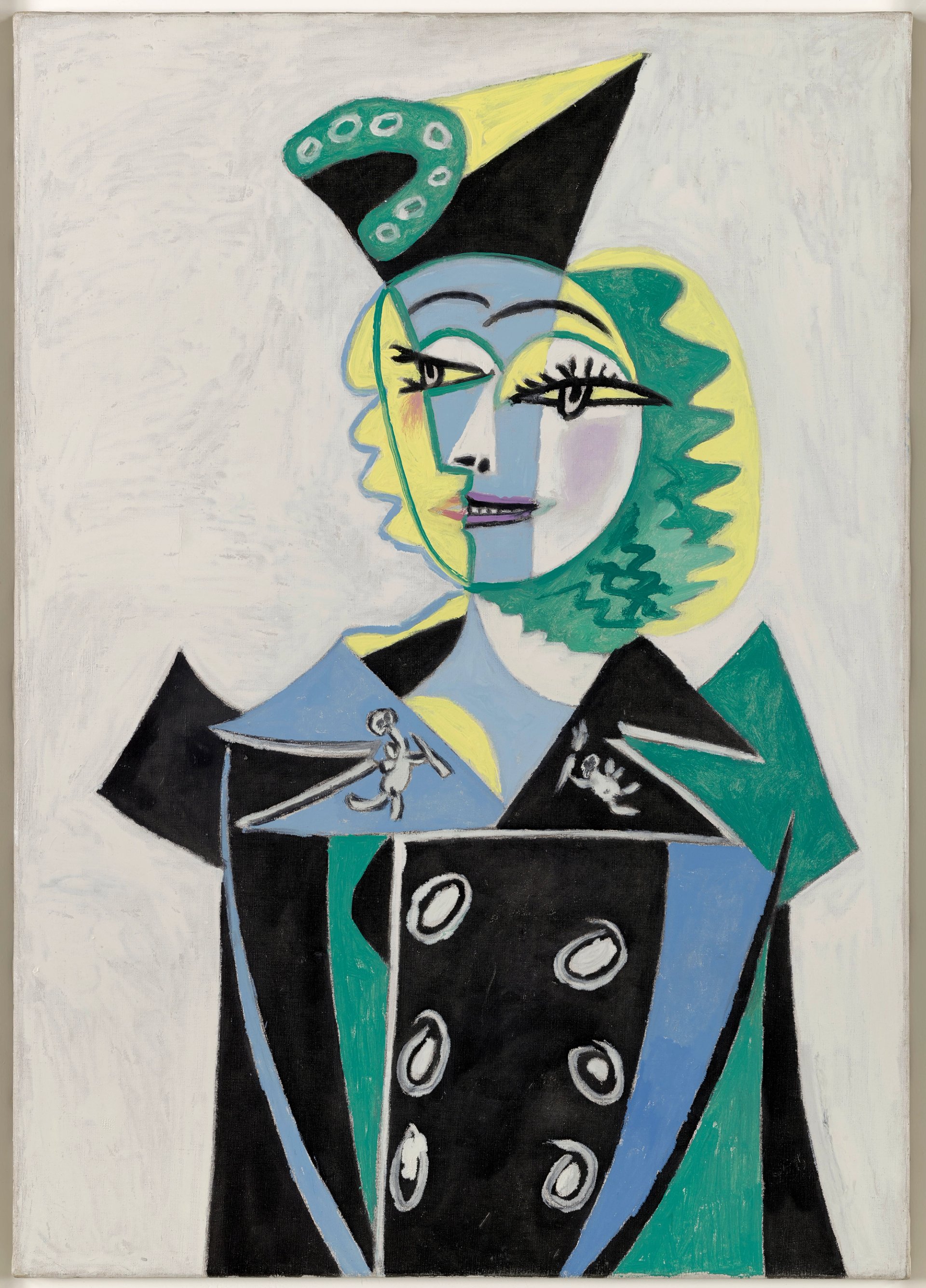
picasso’s Portrait of Nouch Eluard (1937),
Schiaparelli design Photo: Adrian Didierjean. © GrandPalaisRmn (National Picasso Museum, Paris)
The collaboration between Lesage and Schiaparelli was crucial to her collection. As Pastore says, she believed it was “exhilarating to work in a place where artists and craftsmen intersect,” seeing that interaction as part of invention rather than execution. She and Dali skeleton dress That was the beginning of the V&A show. On the other hand, Lesage’s interpretation of Schiaparelli is lighter than the dense embellishments of sequins and beads that have come to dominate today’s haute couture embroidery and are clearly responsible for women’s working hours. Simple silk stitching depicts a bolero prancing horse.
Schiaparelli’s circus Collection, ringside “curtains” with real tassels. These, with their unexpected embellishments on the torso, were a precursor to the now ubiquitous graphic print T-shirts.
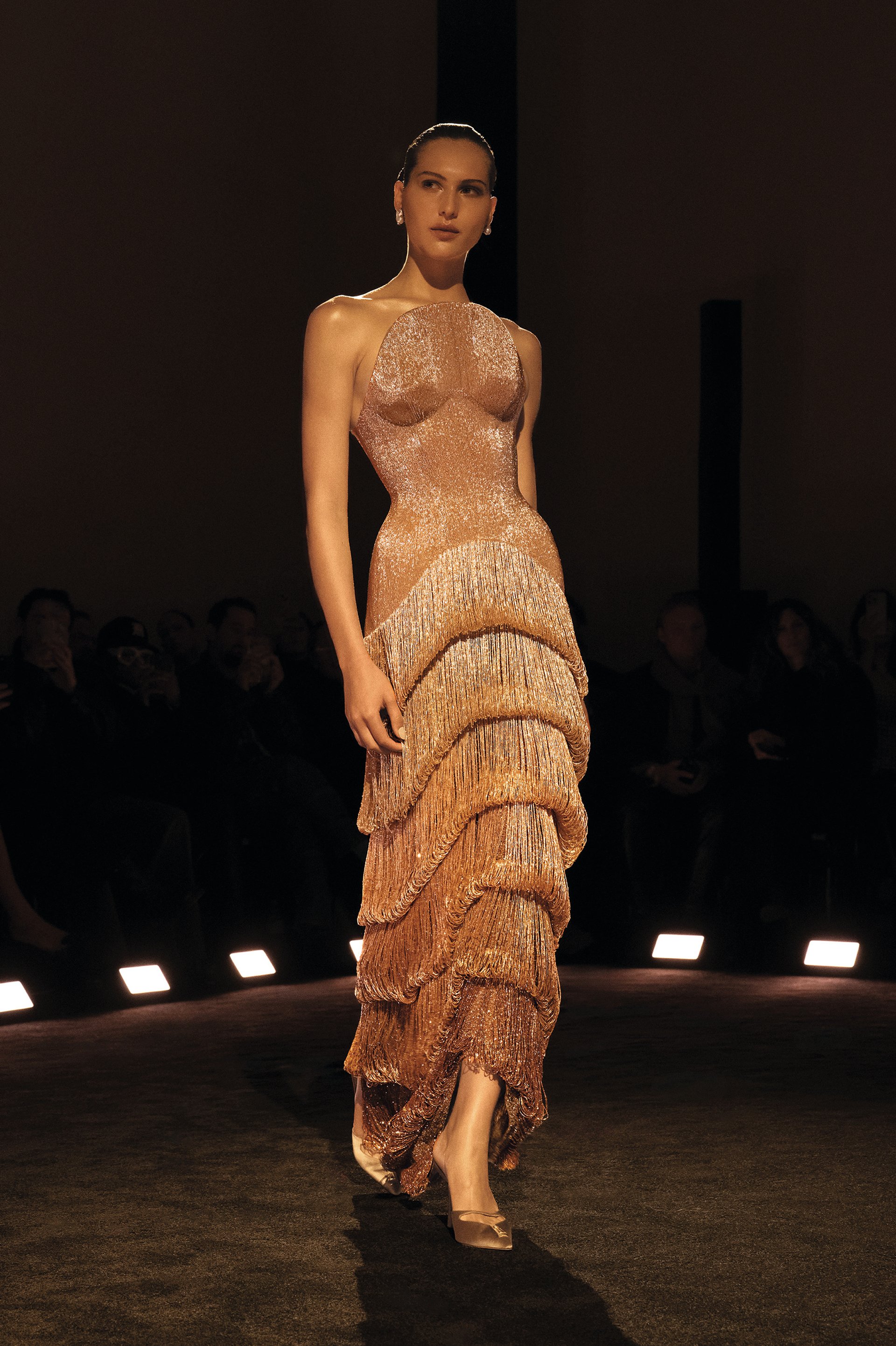
Schiaparelli’s current creative director, Daniel Rosebery, continues his creator’s ethos of provocative design, as seen in his recent Spring/Summer 2026 collection. © Schiaparelli
some circus The jacket appears to be closed with molded and painted buttons, like a trapeze artist’s, for example, but the actual closure is hidden underneath, a metal hook and bar. As well as constantly pursuing experimental textiles with new dye formulations (her introduction of “shocking pink” did just that, although it was not easy to manufacture at first), Schiaparelli enjoyed devising three-dimensional objects for women to wear and carry, sometimes in collusion with artists. Together with Dali, she created the famous shoe-shaped hat with a raised heel.
But when you visit an exhibition, keep an eye out for buttons that are much more than just a novelty. Pastore calls them “miniature works…structural punctuation rather than decorative additions.” Crafted by miniature sculptors such as Gisèle Fabre-Pensard and François Hugo, these delightful surrealist jokes, like the unconscious flotsam and jetsam of a hedonistic era, stand out in high relief on plain tailored suits. There are beetles, butterflies, snails, candlesticks, a grand piano, mermaids, padlocks, and even a plastic handle on a garment that recreates Dali’s painting of a woman as a chest of drawers.
In 1940, as the realities of World War II loomed over Paris, Schiaparelli presented his final collection before leaving the United States. The collection featured giant box pockets with flap brass buttons, embellished with Lesage gold scrolls. They decided to say goodbye. When she returned to France after the war, art applied to clothing was no longer the desired style. Schiaparelli retired in 1954 when Chanel reopened her home.
• Schiaparelli: Fashion becomes artVictoria and Albert Museum, London, until 1 November.
#exhibition #celebrates #designer #Elsa #Schiaparellis #unique #blend #art #fashion