
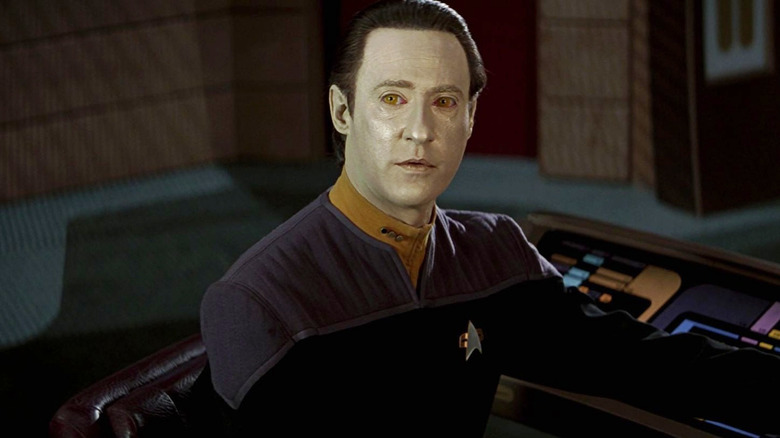
Of all the Star Trek movies to date, Nicholas Meyer’s 1982 film Star Trek II: The Wrath of Khan is generally agreed to be the best. Of course, this is a matter that can be passionately debated, and I’d hasten to declare that both Robert Wise’s 1979 film Star Trek: The Motion Picture (which is far from boring) and Mayer’s own 1991 essay on crumbling idealism, Star Trek VI: The Undiscovered Country, are better than The Wrath of Khan. However, my opinions are just that of one Trekkie and are by no means definitive or unchanging. Also, I have little disdain for The Wrath of Khan, finding it to be a solid dramatic film with good character work, notable themes around aging, some grand sci-fi ideas, and a fun and evil antagonist played by Ricardo Montalban.
Roger Ebert reviewed numerous Star Trek movies before his death in 2013. And it was clear he was never a Trekkie. Despite being a big fan of all things science fiction, Ebert wasn’t going to bless the “Trek” movies with four stars. He gave Star Trek: The Motion Picture only three stars, arguing that grand sci-fi concepts work best when not explored with characters we’ve known for more than a decade. He similarly gave “The Wrath of Khan” three stars, but had strangely opposite feelings about it, saying it was a very good character piece.
But Ebert gave three and a half stars to two other Star Trek films, including the 1996 film Star Trek: First Contact, directed by Jonathan Frakes. He called it “one of the best of the eight Star Trek films, certainly the best in its technical achievement, and one of the best in its plot ingenuity.” But many Trekkies also like “First Contact,” so Ebert’s opinion is in line with popular opinion.
Roger Ebert liked Star Trek: First Contact better than The Wrath of Khan.
By the way, Roger Ebert gave Star Trek III: The Search for Spock 3 stars, Star Trek IV: The Voyage Home 3 and a half stars, Star Trek V: The Last Frontier 2 stars, The Undiscovered Country 3 stars, Star Trek Generations 2 stars, Star Trek: Insurrection 2 stars, Star Trek: Nemesis 2 stars. Star Trek, 2009. After Ebert’s death, critic Matt Zoller Seitz gave both Star Trek Into Darkness and Star Trek Beyond two and a half stars on RogerEbert.com, while critic Clint Worthington gave Star Trek: Section 31 only one star.
Now, Ebert would be the first to say that star ratings are the bane of one’s existence and should not be measured in comparison. He tended to give star ratings based on how successful films were on their own merits, rather than on a universal measure of greatness. Ebert frequently wrote about how much he disliked the star rating system. So every 3 and a half star movie is not necessarily better than every 3 star movie. But given that we’re dealing within a single science fiction series, it may be perfectly safe to take Ebert’s assessment as comparative.
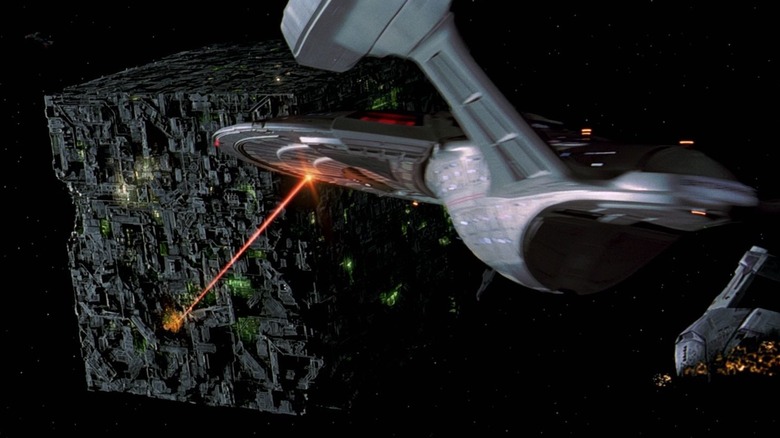
And Ebert judged Star Trek: First Contact to be one of the series’ best films by that standard. This is notable, as Ebert generally felt that the visual effects in most “Star Trek” films tended to be a little clunky, although he praised its time-travel plot and special effects. He particularly enjoyed the film’s opening shot, which begins inside Captain Picard’s (Patrick Stewart) eyeball and pulls outward to reveal the unimaginably large Borg ship.
Star Trek: First Contact’s plot and villain impressed Roger Ebert
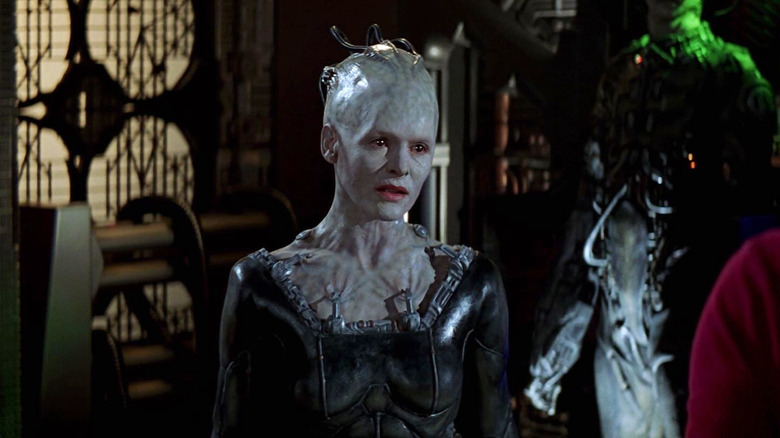
For the uninitiated, Star Trek: First Contact takes the Enterprise-E back in time to the year 2063. The Borg, a malevolent cyborg race, are there first, aiming to attack Earth on the brink of its first faster-than-light spaceflight. Roger Ebert liked that this storyline was complex but clear. He added, “I was also impressed by the interior of the Borg probe and the unique make-up work that made the Borg Queen look like the sexiest concept I’d ever heard. But it inspired me to keep an open mind.”
Ebert said:
“Star Trek movies are more about ideas and dialogue than they are about action and effects. We believed the crew of the original Enterprise would never retire because we didn’t think they could keep talking long enough. The story here gives us yet another interesting test of the differences between humans, aliens, and artificial intelligence.”
That’s an odd observation to make about “First Contact,” which has a higher action quotient than any “Star Trek” movie made before 2009. But it was interesting enough to pique Ebert’s interest. As mentioned earlier, he also loved Star Trek IV: Voyage Home, another time travel story. Perhaps he liked seeing Star Trek characters removed from their futuristic settings.
In a 2009 review of “Star Trek,” Ebert admitted that he was tired of the nature of “Star Trek” and felt it had some limitations. “Like many franchises, Star Trek is more focused on repeating successful formulas than boldly venturing into territory it hasn’t gone before,” he wrote. One can only guess what he thought of Section 31, which /Film’s Jacob Hall called “B-movie garbage (in a good way)” in his review.
#Roger #Ebert #thought #90s #Star #Trek #movie #Wrath #Khan #SlashFilm