
A project envisioned by Diego Rivera as a future “arts city” south of Mexico City has received its biggest support in decades from the artist’s grandson. Juan Rafael Coronel Rivera donated 157,300 works from his personal collection to the Anahuacalli Museum. In a move to expand the institution’s holdings and revive the cultural vision envisioned by his famous grandfather.
Ranging from ceramics, textiles, woodwork, prints, photographs, archives, and a research library, the gifts include works from the 16th century to the present day. The transfer will take place in stages over the coming months, starting with the pottery, followed by manuscripts and letters related to Diego Rivera. The process is expected to be completed by the end of the year.
Photographer, art historian, writer, and collector Coronel Rivera has spent more than 40 years building a collection shaped by his involvement with Mexican art. This particularly eclectic exhibit brings together pre-Hispanic objects, personal and family documents related to Diego Rivera, and works from Coronel Rivera’s own career, but does not include paintings by Diego Rivera or Frida Kahlo.
The gift brings renewed attention to the organizational structure designed by Diego Rivera in 1955. At this time, he entered into an irrevocable trusteeship with the Bank of Mexico to ensure the opening of his two museums to the public. The trust jointly manages the Anahuacalli Museum and the Frida Kahlo Museum, known as Casa Azul.
“The collection was always intended to be housed in a museum,” Coronel Rivera said at a press conference at the Anahuacalli Museum last month. “But I never expected it to end up here,” he said, adding that he had never worked closely with the trust before and said the agreement was a natural fit.
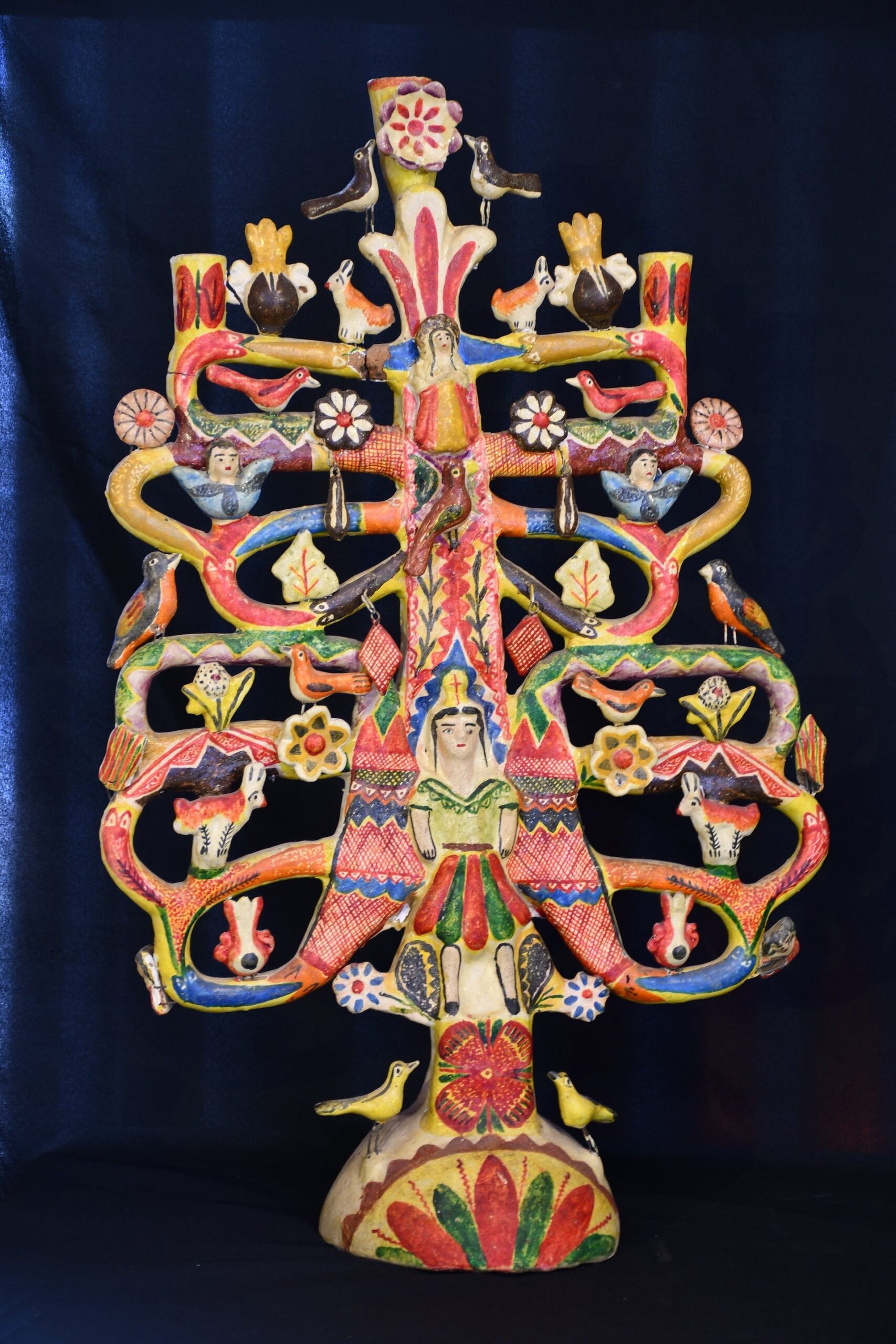
One of the works donated to the museum Provided by: Anawakali Museum
Diego Rivera founded the Anahuacalli Museum to house a collection of pre-Hispanic art, which he left to the Mexican people. The building’s volcanic stone architecture has made it one of the most distinctive cultural spaces in southern Mexico City.
In the 1940s and 50s, Diego Rivera envisioned a larger “city of arts” on the same site, a campus dedicated to art production, education, and the meeting of different artistic traditions. In his own words, it meant uniting “artists trained in schools and academies with potters, weavers, basket makers, masons, and all that is the purest and highest expression of the Mexican people.”
For Teresa Moya, director of the Anahuacari Museum, the addition of Coronel Rivera’s collection revives the mission that was part of the museum’s origins. “Diego Rivera conceived this museum not just as an exhibition space, but as a place where collecting becomes a form of knowledge,” she says. art newspaper. Moya added that the gift strengthens the museum’s role as a center for research, preservation, and consultation, and further establishes the museum as an institution that connects the pre-Hispanic past, modern and contemporary art, and the vast archives of the present.
Perla Labate Álvarez, director of the Frida Kahlo Museum, said the donation will create new reading possibilities for the entire collection. “Frida and Diego saw collecting as a way to honor the cultures that came before them and the way they understood the world,” she says. “Both Casa Azul and the Diego Rivera Anawakali Museum are spaces rooted in that belief.”
Coronel Rivera’s donation coincides with plans for the expansion of the Anahuacalli Museum. At a press conference, Mauricio Rocha, the architect who led the museum’s previous expansion from 2016 to 2021, said the new building that will house the collection is still in the conceptual stages. Construction is expected to begin in late 2026 or 2027, but budget details have not been announced.
#Diego #Riveras #grandson #donates #items #Mexico #Citys #Anahuacalli #Museum